Supreme Court Upholds Maintenance Rights for Widowed Daughters-in-law Supreme Court rules widowed daughters-in-law entitled to maintenance from father-in-law's estate, affirming equality and dignity under Hindu Adoptions and Maintenance Act, 1956.
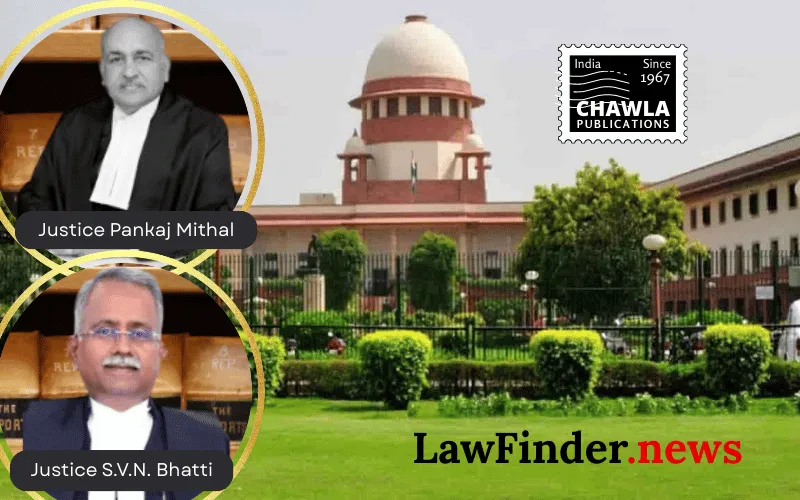
In a landmark judgment, the Supreme Court of India has affirmed the rights of widowed daughters-in-law to claim maintenance from the estate of their deceased father-in-law, irrespective of whether they became widows before or after the father-in-law's death. The ruling, delivered by a bench comprising Justices Pankaj Mithal and S.V.N. Bhatti, underscores the importance of constitutional values of equality and dignity, interpreting the Hindu Adoptions and Maintenance Act, 1956 in alignment with these principles.
The case arose from a legal dispute involving the family of the late Dr. Mahendra Prasad, whose son Ranjit Sharma passed away after Dr. Prasad's death. Geeta Sharma, the widow of Ranjit, sought maintenance from Dr. Prasad's estate. Her petition was initially dismissed by the Family Court on the grounds that she was not a widow at the time of Dr. Prasad's demise. However, the High Court overturned this decision, leading to an appeal by Kanchana Rai, widow of another son of Dr. Prasad, and Uma Devi, who claimed a long-term partnership with Dr. Prasad.
In its judgment, the Supreme Court clarified that under Sections 21(vii) and 22 of the Hindu Adoptions and Maintenance Act, 1956, "any widow of his son" includes all widows of sons of a deceased Hindu, regardless of when they became widows. The Court emphasized that such widows are dependants entitled to maintenance, provided they cannot sustain themselves through their husband's or children's estate.
The Court's decision also highlighted the principles of literal interpretation of statutes, stating that when the language of the law is clear, it must be interpreted as it stands. The judgment rejected any restrictive interpretations that would exclude widows based on the timing of their husband's death, labeling such distinctions as arbitrary and violative of Article 14 of the Constitution of India, which guarantees equality before the law.
Furthermore, the Court recognized the obligation of the deceased's heirs to maintain dependants from the inherited estate, reinforcing the social and moral responsibility towards widowed daughters-in-law. This judgment is seen as a significant step towards ensuring social justice and protecting the dignity of vulnerable dependants, aligning legal interpretations with constitutional mandates.
The appeals were dismissed, affirming the High Court's order for the Family Court to determine the quantum of maintenance for Geeta Sharma based on the merits of the case.
Bottom Line:
A widow of a son is a dependant under Section 21(vii) of the Act and is entitled to claim maintenance under Section 22 of the Act, irrespective of when she became a widow - Interpretation of statutory provisions must align with constitutional values of equality and dignity.
Statutory provision(s): Hindu Adoptions and Maintenance Act, 1956 Sections 21(vii), 22, 19; Constitution of India, 1950 Articles 14, 21.
Kanchana Rai v. Geeta Sharma, (SC) : Law Finder Doc Id # 2837280