Supreme Court Overturns High Court Decision; Additional Accused Summoned in Bulandshahar Shooting Case Supreme Court exercises discretionary power under Section 319 CrPC, directing trial of additional accused based on prima facie evidence.
In a significant development, the Supreme Court of India has set aside the judgment of the Allahabad High Court, thereby summoning additional accused in the high-profile Bulandshahar shooting case. The case revolves around the tragic incident where Smt. Nishi was allegedly shot by her husband, Rahul, at the behest of his relatives. The apex court's decision came in response to an appeal filed by Neeraj Kumar, the brother of the deceased, challenging the orders of both the Trial Court and the High Court, which had previously dismissed an application under Section 319 of the Code of Criminal Procedure, 1973 (CrPC).
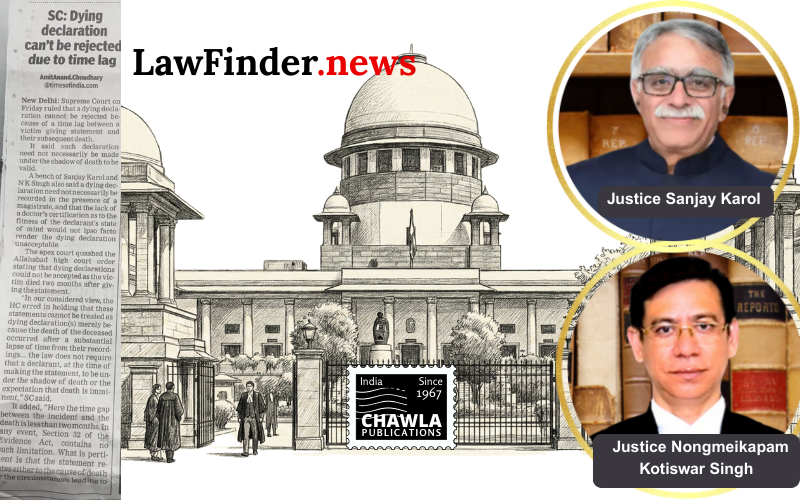
The Supreme Court's bench, comprising Justices Sanjay Karol and Nongmeikapam Kotiswar Singh, emphasized that the power under Section 319 CrPC is extraordinary and should be exercised sparingly. However, they noted that the material on record, including testimonies and statements, provided a strong prima facie case for the involvement of the additional accused, identified as Rahul's mother, brother, and brother-in-law.
The court highlighted that the testimonies of key witnesses, including the minor daughter of the deceased and the statements recorded under Section 161 CrPC, pointed towards a larger conspiracy involving the respondents. The court criticized the lower courts for conducting what it termed a 'mini-trial' at the summoning stage, which is beyond the scope of Section 319 CrPC.
The Supreme Court stressed that the testimony of the minor daughter, who was a crucial eyewitness, had considerable evidentiary value and should not have been dismissed by the lower courts. Additionally, the court ruled that the statements of the deceased recorded before her death could be treated as dying declarations under Section 32 of the Indian Evidence Act, thereby dismissing the High Court's rationale for rejecting them.
Emphasizing the need for a fair trial, the Supreme Court directed the respondents to appear before the Trial Court on January 8, 2026, and instructed all parties to cooperate without seeking unnecessary adjournments. This ruling ensures that the accused will face trial, upholding the principle that no guilty person should escape the clutches of law.
Statutory provision(s): Section 319 CrPC, Section 307 IPC, Section 302 IPC, Section 316 IPC, Section 32 Evidence Act, Section 161 CrPC
Neeraj Kumar @ Neeraj Yadav v. State of U.P., (SC) : Law Finder Doc Id # 2817677