Court extends benefit of doubt to Ram Jiyawan, citing prosecution's failure to explain injuries and inconsistencies in testimonies.
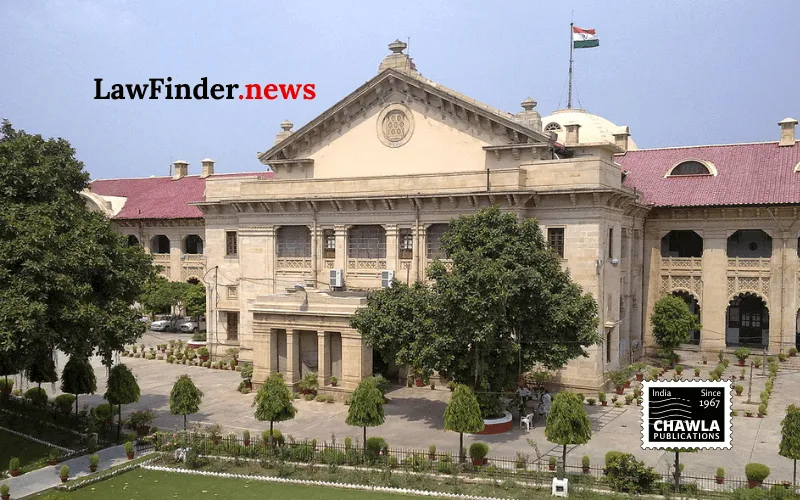
In a significant judgment, the Allahabad High Court has acquitted Ram Jiyawan, the sole surviving accused in a decades-old murder case, extending the benefit of doubt due to the prosecution's failure to adequately explain injuries sustained by the accused and inconsistencies in witness testimonies. The case, which dates back to an incident on November 27, 1980, involved the alleged murder of Ram Autar during a land dispute in Faizabad, Uttar Pradesh.
The division bench, comprising Justices Rajiv Gupta and Pramod Kumar Srivastava, overturned the trial court's conviction of Ram Jiyawan under Sections 304 Part-II, 147, and 323 read with Section 149 of the Indian Penal Code (IPC). The judgment noted critical gaps in the prosecution's case, including the absence of farsa injuries on the deceased, despite eyewitnesses claiming such an attack.
The court emphasized that the prosecution suppressed the origin and genesis of the occurrence, failing to account for injuries on the accused party, which included Jairam, Birja, and Ram Jiyawan. The bench highlighted that the trial court did not adequately address these omissions, leading to a conviction based on unreliable witness testimonies.
The case's background involves a land dispute between the parties, with conflicting claims of ownership and possession. The prosecution alleged that the accused, armed with lathis and farsa, attacked Ram Autar and others, leading to Ram Autar's death. However, the defense argued that the accused were acting in self-defense during a free fight instigated by the complainant's party.
The judgment underscored the importance of explaining injuries on both sides in criminal cases, referencing several Supreme Court decisions advocating for extending the benefit of doubt when the prosecution suppresses critical facts.
The court's decision also dismissed a connected government appeal, affirming the acquittal of another accused, Birja, who was initially alleged to have inflicted fatal injuries. The bench's ruling reiterated the necessity for a fair trial and comprehensive evidence examination, especially in cases hinging on eyewitness accounts and physical evidence.
The Allahabad High Court's verdict highlights procedural lapses in the trial process and underscores the judiciary's role in ensuring justice through rigorous scrutiny of evidence and adherence to legal principles.
Bottom Line:
Benefit of doubt must be extended to the accused if the prosecution suppresses the origin and genesis of the occurrence and fails to explain injuries sustained by the accused.
Statutory provision(s): Section 304 Part-II IPC, Section 147 IPC, Section 323 IPC, Section 149 IPC, Section 313 CrPC, Section 437A CrPC
Jairam v. State of U.P., (Allahabad)(Lucknow)(DB) : Law Finder Doc Id # 2815093