Civil Bar Association's Plea for Government-Assumed Utility Costs Rejected; Advocates Urged to Bear Own Financial Responsibilities
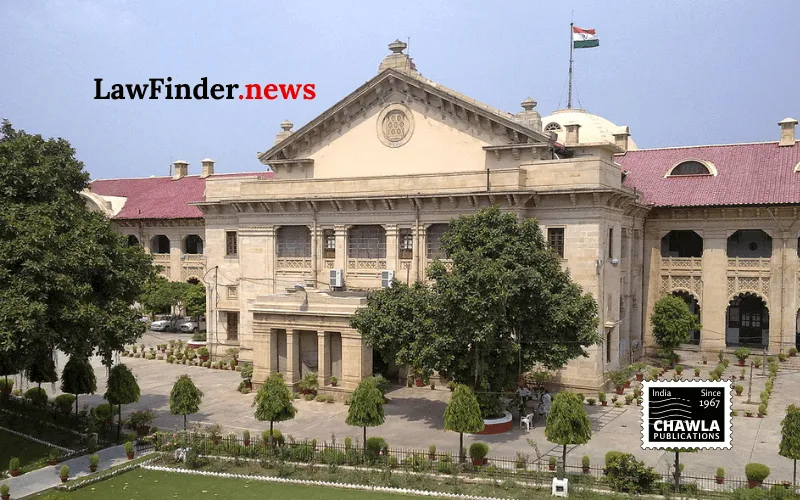
In a significant judgment delivered on October 30, 2025, the Allahabad High Court, in a division bench comprising Justice Saumitra Dayal Singh and Justice Indrajeet Shukla, dismissed a writ petition filed by the Civil Bar Association of Basti, Uttar Pradesh, seeking a mandamus to compel the state government to pay the electricity dues of the Bar Association. The court unequivocally held that there is no statutory duty or policy decision that obligates the state to bear such financial responsibilities.
The petition, filed under Article 226 of the Constitution of India, requested the court to direct the state to deposit both the outstanding and regular electricity bills incurred by the Bar Association. The petitioners argued that advocates, being officers of the court, play a critical role in the judicial system, and thus, the state should provide for the basic utilities necessary for their functioning.
Relying heavily on precedents from the Supreme Court and High Courts, the petitioners cited the Supreme Court judgment in B.D. Kaushik and decisions from the Madhya Pradesh and Punjab & Haryana High Courts, which suggested the provision of free electricity to Bar Associations. However, the Allahabad High Court observed that these precedents do not establish any binding obligation on the state of Uttar Pradesh.
The court pointed out that the decision in B.D. Kaushik revolved around the formation of Bar Associations and did not extend to the financial liabilities of the state concerning utility payments. It further noted that while advocates are integral to the judicial process, this does not translate into the state bearing the costs of facilities used by independent practitioners.
The judgment emphasized that Bar Associations, being bodies of private practitioners, must assume the financial responsibilities for the utilities they consume. The court respectfully disagreed with the Madhya Pradesh High Court's view that advocates' roles justify state-funded utilities, stating that such an extension of principle is unwarranted.
Consequently, the High Court dismissed the petition, allowing the Civil Bar Association the liberty to approach the state government independently for relief. The court concluded that neither the technicalities of mandamus nor the circumstances of the case justified compelling the state to pay the electricity dues.
This judgment underscores the court's stance on maintaining a clear distinction between judicial responsibilities and the financial obligations of Bar Associations. It reinforces the notion that while advocates contribute significantly to the judicial process, their professional expenses must be borne independently.
Bottom Line:
Mandamus cannot be issued to compel the State Government or High Court to pay electricity dues incurred by a Bar Association in the absence of any statutory duty, policy decision, or binding precedential law imposing such obligation.
Statutory provision(s): Article 226 of the Constitution of India
Civil Bar Association District Basti v. State of U.P., (Allahabad)(DB) : Law Finder Doc Id # 2805218