Court emphasizes legal implications under IPC Sections 494/495 and reinforces principles of marriage sanctity
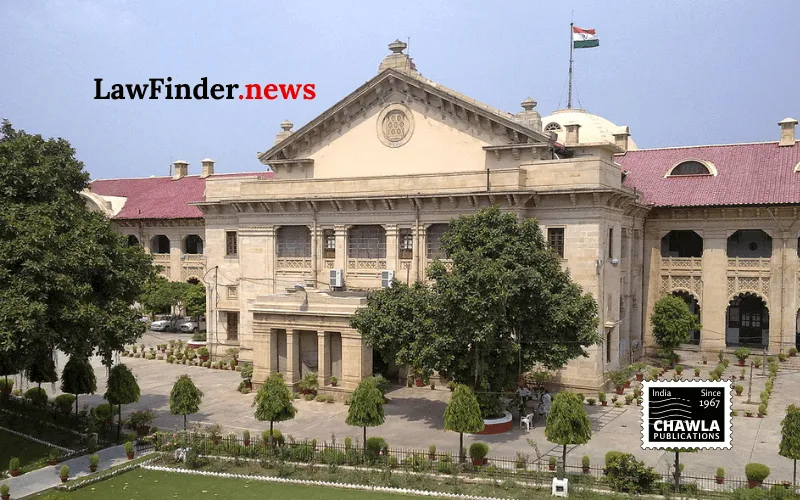
The Allahabad High Court, in a landmark judgment on November 7, 2025, dismissed the petition of Smt. Sonam and her partner seeking protection for their live-in relationship. The court ruled that such protection cannot be granted as it may constitute offenses under Sections 494 and 495 of the Indian Penal Code (IPC) due to the existing marriage of petitioner no. 1, Smt. Sonam.
Justice Vivek Kumar Singh presided over the case where the petitioners sought a writ in the nature of mandamus to prevent interference from Sonam's legally wedded husband and ensure their peaceful cohabitation. However, the court highlighted that Article 226 of the Constitution does not empower the High Court to protect actions that might be deemed illegal under existing laws.
The court referred to several Supreme Court judgments, including the case of D. Velusamy v. D. Patchaiammal, emphasizing that not all live-in relationships qualify as "relationship in the nature of marriage." Such recognition requires fulfilling certain conditions, which were not met in this case. The judgment also reiterated that marriage subsists until legally dissolved, and any relationship during the subsistence of an undissolved marriage is considered bigamous under Section 494 IPC.
The petitioners had admitted that petitioner no. 1 was still legally married to another individual, with a divorce petition pending in court. The court underscored that a decree of divorce must be obtained before entering into any new relationship, highlighting the sanctity of marriage under the Hindu Marriage Act, 1955.
In its ruling, the court drew attention to the necessity of legal rights and duties for the issuance of a writ of mandamus. It held that the petitioners did not possess legally enforceable rights for protection as their relationship potentially violated statutory provisions. The judgment aligns with previous rulings, including the case of Asha Devi v. State of U.P., where the court refused to grant protection to individuals in similar circumstances.
The decision reflects the court's stance on maintaining the social fabric and legal order, especially concerning marital relationships. It affirms that protection cannot be granted if it contravenes established legal norms, particularly those regarding marriage and personal liberty.
Bottom Line:
Protection under Article 226 of the Constitution cannot be granted to individuals in a live-in relationship if one party is already legally married and their marriage has not been dissolved through a competent court - Such relationships may constitute offences under Sections 494/495 of IPC.
Statutory provision(s): Article 226 of the Constitution of India, Sections 494 and 495 of the Indian Penal Code, Section 17 of the Hindu Marriage Act, 1955.
Smt. Sonam v. State of U.P., (Allahabad) : Law Finder Doc Id # 2809178