Court Orders Consortium of National Law Universities to Reassess Question with Multiple Correct Answers, Ensuring Fairness in Evaluation Process
In a landmark judgment, the Allahabad High Court has directed the Consortium of National Law Universities to revise the merit list for the Common Law Admission Test (CLAT) 2026, following a dispute over the evaluation of a question with multiple correct answers. The decision comes after a petition filed by Avneesh Gupta, a minor candidate, who challenged the correctness of answers to specific questions in the exam.
The petitioner, Avneesh Gupta, appeared for the CLAT-2026 at a test center in Ghaziabad, Uttar Pradesh. He raised objections regarding the evaluation of questions 6, 9, and 13 in his test booklet, asserting that his answers were correct. The objections were submitted after the release of the provisional answer key, but the final answer key showed no changes, prompting the petitioner to seek judicial intervention.
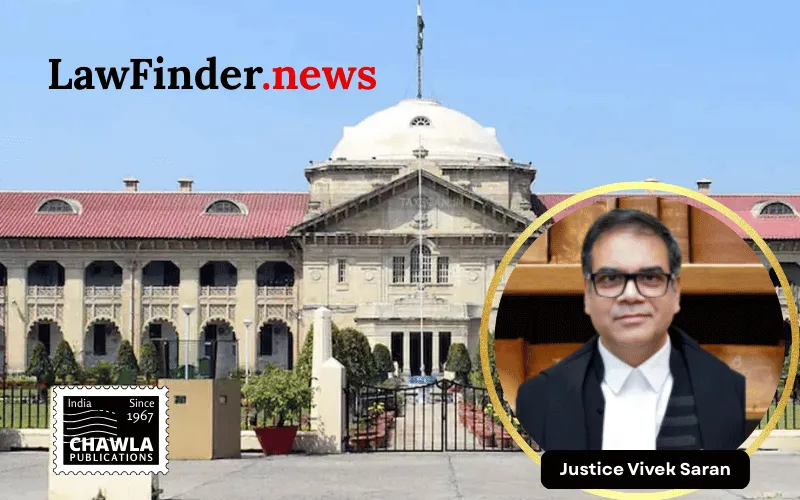
Justice Vivek Saran, presiding over the case, addressed two key issues: the territorial jurisdiction of the court and the scope of judicial review in academic matters. The court confirmed its jurisdiction, stating that even a small fraction of the cause of action arising within its territorial limits suffices for jurisdiction under Article 226 of the Constitution of India.
On the issue of judicial review, the court acknowledged the general restraint exercised by courts in re-evaluating academic assessments, emphasizing that such matters are best left to experts unless there is a patent error. However, the court found that the Oversight Committee, which overruled the Expert Committee's decision on question 9 without providing any reasons, acted contrary to principles of natural justice. The court reiterated that "reason is the heartbeat of every conclusion" and its absence invalidates the decision-making process.
The court's order mandates the Consortium of National Law Universities to revise the merit list by recognizing both 'B' and 'D' as correct answers for the disputed question. This revised merit list must be published within a month, with the stipulation that admissions already finalized in the first round of counseling remain undisturbed.
The decision highlights the court's role in ensuring transparency and fairness in competitive examinations, reinforcing the necessity for reasoned decision-making in academic evaluations.
Bottom Line:
Examination - Courts should not re-evaluate or scrutinize answer sheets of candidates as academic matters are best left to experts unless answers are patently wrong on the face of it - Oversight Committee must provide reasons for overruling Expert Committee's decision.
Statutory provision(s): Article 226 of the Constitution of India