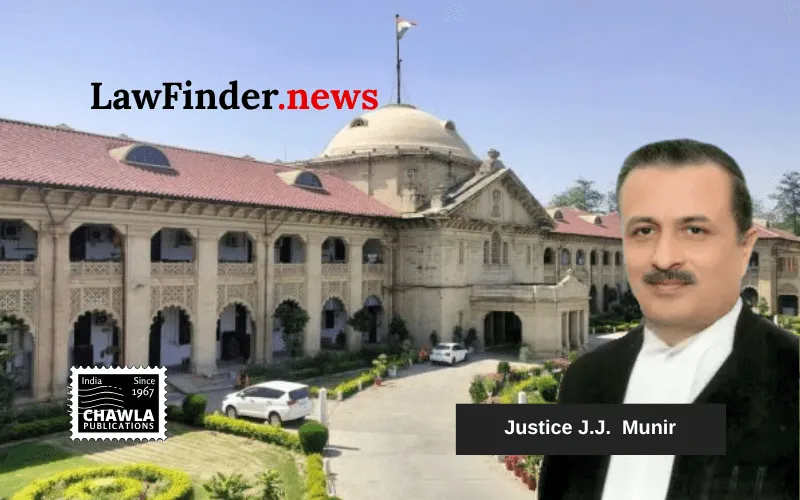
Court Affirms Limited Jurisdiction of Mutation Proceedings, Directs Complex Title Disputes to Regular Suit
In a significant ruling, the Allahabad High Court dismissed the writ petition filed by Rajveer Singh, concerning a long-standing land mutation dispute. The court upheld the decision of the Board of Revenue, Uttar Pradesh, which affirmed that mutation proceedings are limited in scope and cannot adjudicate complex questions of title.
The case revolved around the mutation order dated September 30, 1970, which was passed in favor of Lal Singh, the fifth respondent. This order was contested by Rajveer Singh, who claimed it was obtained fraudulently and without notice to the rightful heirs. Singh argued that he is the legitimate heir to the land in dispute, originally owned by his ancestors, and alleged that Lal Singh had no rightful claim.
The High Court, in its judgment dated March 23, 2026, reiterated that mutation proceedings are summary in nature and primarily concerned with updating revenue records. The court emphasized that such proceedings are not meant to resolve intricate title disputes, which should be pursued through regular civil suits seeking a declaration of title.
The court also observed that the petitioner failed to act during the consolidation operations, which weakened his case. The Naib Tahsildar's decision to reject the restoration application was upheld on the grounds of being time-barred, as it was filed 34 years after the original mutation order.
The judgment highlighted that any claim of fraud or rightful inheritance should be addressed through a proper legal suit, where the court can thoroughly examine the title complexities. The court's decision underscores the importance of pursuing appropriate legal channels for resolving inheritance and title disputes rather than relying on summary proceedings.
This ruling serves as a reminder of the procedural limitations of mutation authorities and the necessity of engaging in full-fledged legal proceedings to establish rightful ownership in complex cases.
Bottom Line:
Mutation proceedings are summary in nature and meant to safeguard the interests of revenue and correct records of rights. Complicated questions of title should be adjudicated through regular suits and not in mutation proceedings.
Statutory provision(s):
Uttar Pradesh Zamindari Abolition and Land Reforms Act, 1950, Sections 171 and 175; Uttar Pradesh Land Revenue Act, 1901, Section 34; Uttar Pradesh Consolidation of Holdings Act, 1953, Section 49; Limitation Act, 1963, Section 5
Rajveer Singh v. Board of Revenue, Uttar Pradesh, Lucknow, (Allahabad) : Law Finder Doc id # 2878685