Court Upholds Jurisdictional Limits, Directs Petitioners to Pursue Remedies Under Arbitration Act
In a significant ruling, the Allahabad High Court has dismissed a batch of writ petitions filed by landowners seeking a time-bound resolution of their arbitration claims related to compensation for land acquired under the National Highways Act, 1956. The court emphasized that statutory arbitration proceedings under Section 3G(5) of the National Highways Act are governed by the Arbitration and Conciliation Act, 1996, and any extension of the arbitrator's mandate falls exclusively within the jurisdiction of the competent civil court as defined under the Arbitration Act.
The leading case, filed by petitioner Suryadev Pathak and others, challenged delays in arbitration proceedings concerning compensation for land acquired for the Bharat Mala Scheme's national highway projects. The petitioners sought a writ of mandamus from the court to compel arbitrators to decide on their claims within a specified timeframe.
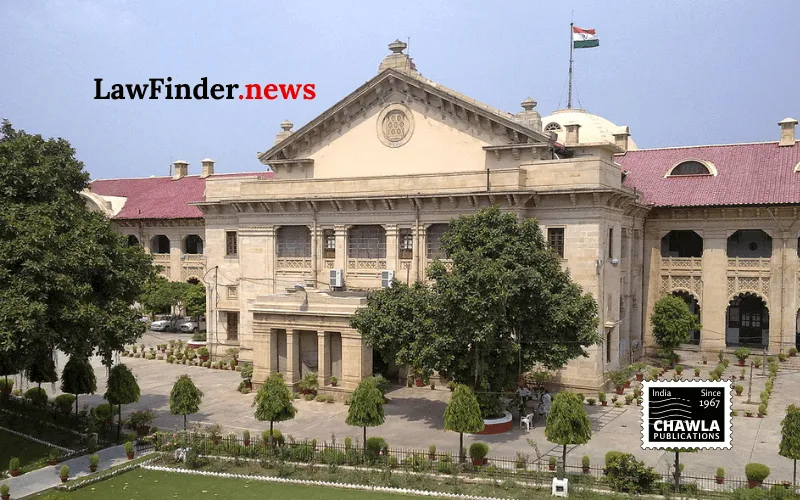
The bench, comprising Justice Mahesh Chandra Tripathi and Justice Kunal Ravi Singh, concluded that the High Court lacks the jurisdiction to issue such directives, given the clear statutory provisions under Section 29A of the Arbitration Act, which prescribe timelines for arbitration and designate the competent civil court as the forum for extending the mandate of arbitrators beyond the statutory period.
The court noted that, in several cases, the statutory period for arbitration had already lapsed, rendering the arbitrators functus officio. It asserted that any extension of the arbitrators' mandate could only be sought through the competent civil court, not through writ petitions under Article 226 of the Constitution. The court further observed that the remedy available under the Arbitration Act is adequate and efficacious, and the High Court should not be used to bypass statutory mechanisms.
The judgment reiterated the principle that High Courts without ordinary original civil jurisdiction cannot assume powers reserved for civil courts under the Arbitration Act. The decision aligns with previous rulings, including those by the Supreme Court, emphasizing the legislative intent to keep arbitration matters within the purview of the designated civil courts.
While dismissing the petitions, the court clarified that the petitioners are free to approach the appropriate civil court for relief under Section 29A(4) of the Arbitration Act. The decision underscores the judiciary's deference to statutory frameworks governing arbitration and the importance of adhering to procedural mandates.
Bottom Line:
Arbitration proceedings under Section 3G(5) of the National Highways Act, 1956 are governed by the Arbitration and Conciliation Act, 1996. High Courts lacking ordinary original civil jurisdiction cannot exercise powers under Section 29A of the Arbitration Act, 1996 to extend the mandate of arbitrators or issue mandamus for time-bound disposal of arbitration proceedings.
Statutory provision(s): National Highways Act, 1956 Section 3G(5), Arbitration and Conciliation Act, 1996 Sections 2(1)(e)(i), 29A, Constitution of India Article 226
Suryadev Pathak v. Union of India, (Allahabad)(DB) : Law Finder Doc Id # 2813738