Court rules Rule 16 of UP Government Servant (Medical Attendance) Rules, 2011 as arbitrary; allows legal heirs of deceased beneficiaries to claim medical reimbursement.
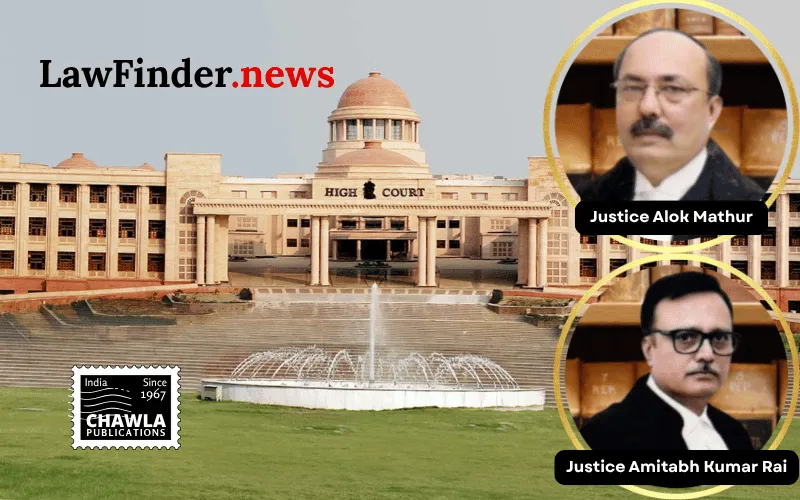
In a significant ruling, the Allahabad High Court has ordered a reinterpretation of Rule 16 of the Uttar Pradesh Government Servant (Medical Attendance) Rules, 2011, which previously restricted the submission of medical reimbursement claims exclusively to beneficiaries. The Division Bench of Justices Alok Mathur and Amitabh Kumar Rai delivered the judgment on March 11, 2026, in the case of Chandra Choor Singh v. State of U.P., addressing the arbitrary nature of the rule as violative of Article 14 of the Indian Constitution.
The case was brought forward by Chandra Choor Singh, who sought medical reimbursement for expenses incurred during the treatment of his late father, Rudra Pratap Singh, a retired Deputy Registrar. Singh's claims were initially rejected on the grounds that he did not qualify as a 'beneficiary' under the existing definition, which only recognized surviving government servants or their families.
The court noted that the rigid interpretation of Rule 16 failed to consider scenarios where the government servant dies or becomes incapacitated during treatment, leaving no surviving beneficiary to claim reimbursement. The bench emphasized that such a classification was arbitrary, lacking a reasonable nexus with the objectives of the beneficial legislation aimed at facilitating medical reimbursements.
In a detailed analysis, the court invoked the principle of 'reading down' to reinterpret the rule, thereby including legal heirs in the absence of surviving beneficiaries. The judgment referenced the Supreme Court's standards under Article 14, underscoring the need for rational classification and fair treatment.
Furthermore, the court addressed the issue of a succession certificate limiting claims to Rs. 5,000, ruling that such limitations should not impede the rightful reimbursement claims of legal heirs, provided there is no dispute over heirship.
The ruling directs the State to reconsider Singh's claim, with orders to process and disburse the reimbursement if found valid. This landmark decision is expected to set a precedent for similar cases, enhancing the scope of medical reimbursement rights for legal heirs of deceased or incapacitated government servants.
Bottom Line:
Rule 16 of Uttar Pradesh Government Servant (Medical Attendance) Rules, 2011, restricting submission of medical reimbursement claims only to "beneficiaries," held arbitrary and violative of Article 14 of the Constitution. Legal heirs of deceased or incapacitated beneficiaries allowed to submit claims under Rule 16 after applying the principle of "reading down."
Statutory provision(s): Article 14 of the Constitution of India, Rule 16 of Uttar Pradesh Government Servant (Medical Attendance) Rules, 2011.
Chandra Choor Singh v. State Of U.P., (Allahabad)(DB)(Lucknow) : Law Finder Doc id # 2874265