Judgment Rectifies Prior Errors, Directs Tribunal to Reassess Case on Merits After Long-Standing Legal Battle
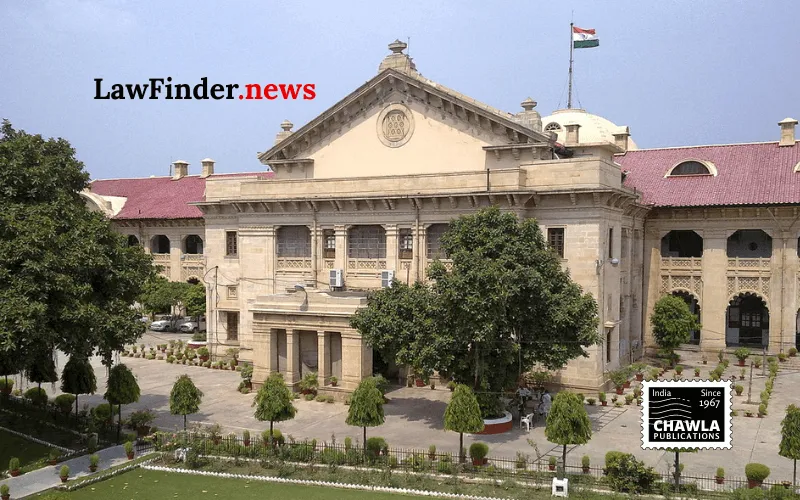
In a significant development, the Allahabad High Court has ordered a fresh adjudication of the seniority dispute involving trained apprentices of the Indian Railways, marking a crucial turn in a legal battle that has spanned over two decades. The Division Bench, comprising Justices Mahesh Chandra Tripathi and Prakash Padia, reviewed and set aside its previous judgment dated 16th May 2019, which had dismissed the petitioners' claims on grounds of limitation.
The case involves Ashok Kumar Yadav and others, who filed a review application challenging the earlier dismissal of their writ petition, which sought to correct the seniority list and grant promotional benefits comparable to those given to a peer, Mohd. Niyaz, despite their higher merit scores. The High Court acknowledged the errors in its previous judgment and that of the Central Administrative Tribunal (CAT), which had barred their claim as time-barred.
The core of the dispute arose from an incorrect fixation of seniority post-regularisation of the petitioners in 2014. The High Court found that the cause of action did not arise in 1990 or 2002, as previously assumed, but after their appointment in 2013 and regularisation in 2014. The court recognized the petitioners' diligent pursuit of justice through various legal avenues, including a contempt petition that led to their eventual appointment.
The High Court emphasized the binding nature of the earlier orders by the Principal Bench of CAT, which mandated the fixation of seniority based on merit, a directive that attained finality up to the Supreme Court. The judgment underscored that the petitioners were not seeking to disrupt any settled seniority but to enforce these binding directions.
In its decision, the Allahabad High Court underscored the constitutional obligation of courts to rectify errors that result in miscarriage of justice. Citing the Supreme Court's jurisprudence, the court reiterated that technicalities or procedural barriers should not obstruct the path to justice.
The case has been remanded to the Central Administrative Tribunal for fresh adjudication on merits, with specific directions to consider the binding nature of previous orders. The High Court has urged the tribunal to expedite the process, given the prolonged nature of the dispute and its potential impact on the petitioners' entitlements to arrears, promotional benefits, and pension.
Bottom line:-
Review jurisdiction of courts cannot be limited by technicalities where justice demands correction of errors apparent on the face of the record.
Statutory provision(s): Administrative Tribunals Act, 1985 Section 21
Ashok Kumar Yadav v. Union of India, (Allahabad)(DB) : Law Finder Doc id # 2903965