Court Upholds Formation of Three-Member Arbitral Tribunal Despite Petitioner's Objections
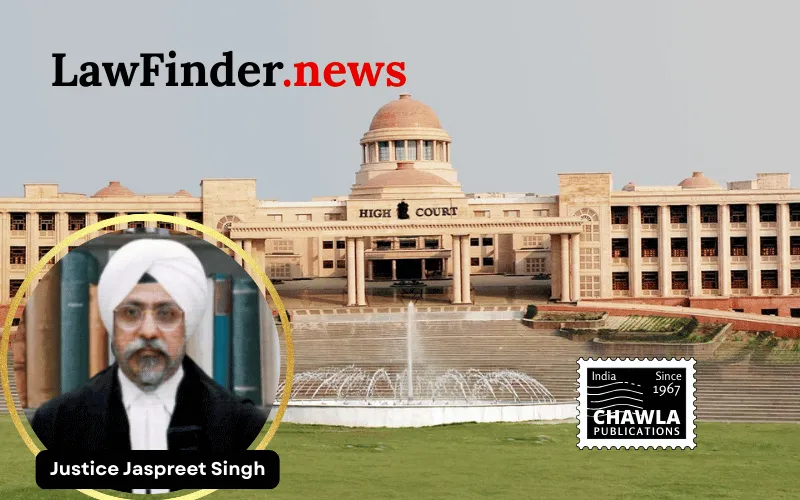
In a significant judgment delivered on May 14, 2026, the Allahabad High Court, presided over by Justice Jaspreet Singh, dismissed an application for recall and review filed by M/S Transrail Lighting Ltd. against Madhyanchal Vidyut Vitran Nigam Ltd. and another. The application sought to challenge the composition of a three-member arbitral tribunal appointed to resolve disputes under a contract containing an arbitration clause.
The petitioner, M/S Transrail Lighting Ltd., initially moved the court to appoint a sole arbitrator in accordance with special conditions of the contract, which stipulated a sole arbitrator for claims valued up to Rs. 25 crores. However, the application for recall was filed after the court had already appointed a nominee arbitrator for the respondents, leading to the constitution of a three-member tribunal.
The High Court emphasized that its inherent powers under Article 215 of the Constitution are extremely limited and can only be invoked to correct grave and palpable errors resulting in a miscarriage of justice. The court held that the petitioner failed to raise objections regarding the arbitral tribunal's composition at an appropriate stage, thus waiving its rights under Section 4 of the Arbitration and Conciliation Act, 1996.
Justice Singh noted that both parties had proceeded with the appointment of arbitrators without objection, effectively consenting to the tribunal's formation. The court also highlighted the Kompetenz-Kompetenz principle, which mandates that objections to the tribunal's jurisdiction or composition should be raised before the tribunal itself.
In dismissing the application, the court reiterated that the grounds for review must be on a higher pedestal than those generally entertained and found the petitioner's apprehensions to be more artificial than substantive. The court concluded that it was not a fit case to exercise its inherent powers to review or recall the orders previously passed.
The judgment reaffirms the principle of minimal judicial interference in arbitration proceedings and underscores the importance of timely objections to procedural irregularities in arbitral appointments.
Bottom line:-
High Court, as a court of record, possesses inherent powers under Article 215 of the Constitution of India to recall or review its orders, but such powers are extremely limited and can only be invoked to correct grave and palpable errors leading to miscarriage of justice.
Statutory provision(s): Article 215 of the Constitution of India, Arbitration and Conciliation Act, 1996 Sections 4, 10, 11, 16