Court Criticizes Bureaucratic Indifference and Stresses Importance of Adhering to Limitation Laws
In a significant judgment, the Allahabad High Court dismissed a batch of 11 special appeals filed by the State of Uttar Pradesh, citing the state's failure to provide "sufficient cause" for delays ranging from 93 to 195 days in filing the appeals. The appeals challenged a judgment passed by a Single Judge on September 9, 2025, which had been in favor of the respondents, including Naveen Kumar Saxena and others.
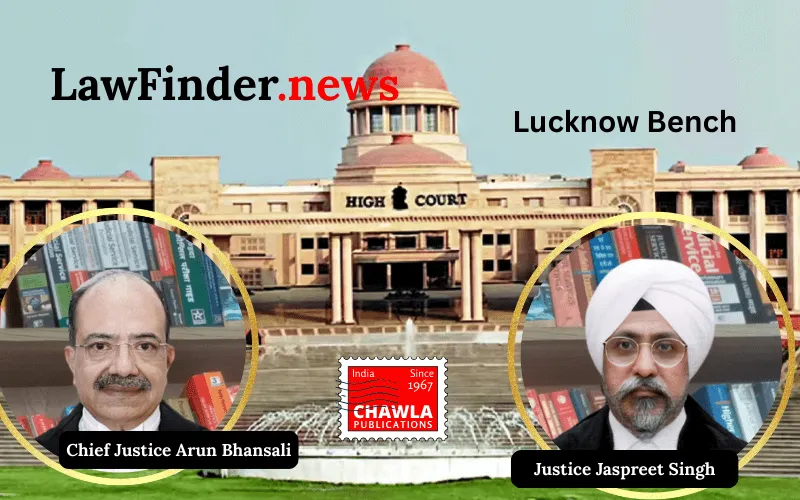
The Division Bench, comprising Chief Justice Arun Bhansali and Justice Jaspreet Singh, delivered the judgment on April 23, 2026. The court emphasized that applications for condonation of delay must demonstrate a bona fide, cogent, and sufficient reason, which cannot be based on bureaucratic indifference or procedural bottlenecks.
The State, represented by Senior Advocate Gaurav Mehrotra, argued that the delay was due to the time-consuming processes involved in seeking legal opinions and necessary approvals through various levels of government. However, the court noted that such reasons do not constitute "sufficient cause." The court criticized the State's casual approach to limitation laws, observing that the State often assumes delays will be condoned regardless of the justification provided.
The Bench pointed out that the State's knowledge of the original judgment, dated September 9, 2025, was admitted as of September 18, 2025. Despite this, the State took more than two months beyond the prescribed 30-day limitation period to file the appeals, without adequate explanation for the delay.
The court further highlighted that similar issues had been previously adjudicated, and the State was aware of the legal positions upheld by higher courts, including the Supreme Court. The judgment underscored that the State cannot rely on procedural delays as a shield and must respect the sanctity of limitation laws.
Citing precedents, the court reiterated that courts should not be swayed by the merits of a case when considering applications for condonation of delay. The focus must remain on whether sufficient cause has been demonstrated for not filing within the prescribed period.
The judgment concluded by dismissing the applications for condonation of delay, resulting in the dismissal of the special appeals. The court's decision reinforces the principle that state authorities must exhibit promptitude and diligence in legal matters, and bureaucratic delays cannot be justified as sufficient cause for condoning delays.
Bottom Line:
Applications for condonation of delay in filing appeals must demonstrate sufficient cause, which cannot be based on bureaucratic indifference, procedural bottlenecks, or casual indifference by the State. Courts must adopt a strict approach to ensure that limitation laws are respected, and delays are not condoned without adequate explanation.
Statutory provision(s): Limitation Act, 1963 Section 5
State of U.P. v. Naveen Kumar Saxena, (Allahabad)(DB)(Lucknow) : Law Finder Doc id # 2888150