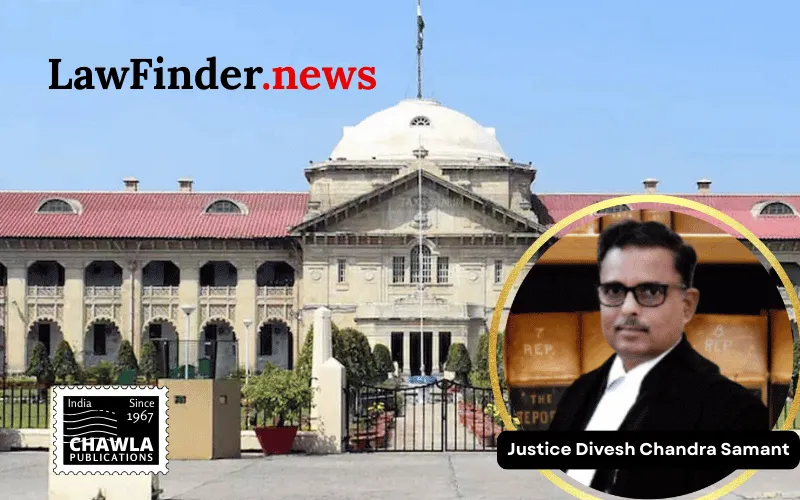
Court Seeks Clarification on Legal Provisions Allowing Additional Chief Standing Counsel to Appear for Private Parties
In a significant ruling, the Allahabad High Court has clarified the role of Additional Chief Standing Counsel (ACSC) concerning their representation in legal cases involving the State of Uttar Pradesh. The court emphasized that the ACSC, who is assigned to represent the State, is not permitted to appear on behalf of a private party in cases where the State is a party, unless explicitly allowed by specific legal provisions or rules.
The ruling came in response to a criminal revision petition filed by Smt. Meera Devi against the State of Uttar Pradesh and another party. During the proceedings, the counsel for the opposite party, Sri Indrasen Singh Tomar, who also serves as Additional Chief Standing Counsel, requested permission to represent the private party. This request was contested by the counsel for the revisionist, arguing that it is against the ethical duties of an ACSC to represent a private party against the State.
Justice Divesh Chandra Samant, presiding over the matter, acknowledged the need for clarity on the issue and has directed the Principal Secretary (Law) & Legal Remembrancer (L.R.) to submit a report detailing the provisions or rules that govern such appearances. The court has provided a two-week timeframe for the submission of this report. This directive underscores the court's commitment to maintaining the integrity and ethical standards of legal practice within the State.
The court's decision highlights the importance of clear demarcation of roles and responsibilities for government-appointed legal representatives, ensuring that there are no conflicts of interest when it comes to representing the State in legal matters. The case has been scheduled for further hearing after two weeks, pending the submission of the requested report.
This ruling serves as a precedent and a reminder for legal practitioners about the ethical boundaries within which they must operate, especially in cases involving government interests. The court's intervention underscores the judiciary's role in safeguarding the principles of legal ethics and ensuring that public officials adhere strictly to their designated roles.
Bottom Line:
Additional Chief Standing Counsel cannot appear for a private party in a case where the State is also a party unless requisite provisions/rules explicitly allow the same.
Statutory provision(s): Legal Ethics.
Smt. Meera Devi v. State of U.P., (Allahabad) : Law Finder Doc Id # 2835232