Court underscores adherence to statutory procedures and Supreme Court guidelines for recovery of maintenance arrears.
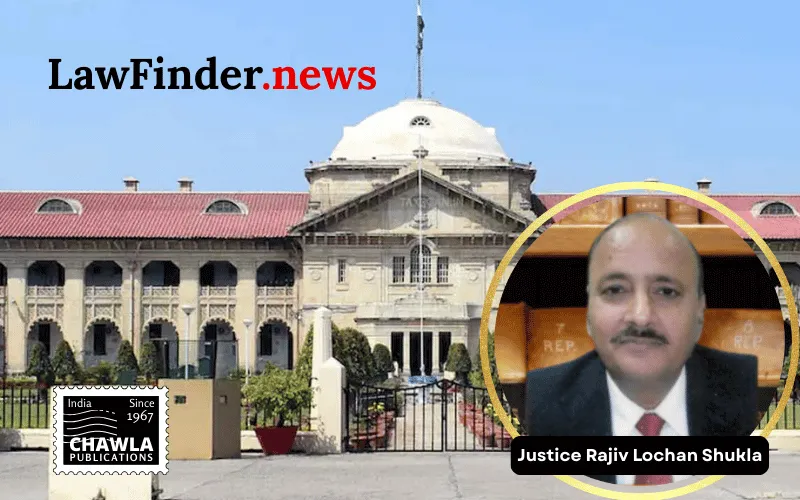
The Allahabad High Court has quashed the arrest warrants issued against Mohammad Shahzad in a case concerning the recovery of maintenance arrears. Justice Rajiv Lochan Shukla, presiding over the matter, emphasized that the issuance of arrest warrants for recovering maintenance arrears violates the statutory provisions and personal liberty guaranteed under Article 21 of the Constitution of India.
The case, titled Mohammad Shahzad v. State of U.P., revolved around the enforcement of maintenance orders passed under Sections 125 and 128 of the Code of Criminal Procedure (CrPC). The court ruled that recovery of maintenance must follow the procedure laid out for levying fines under Section 421 of CrPC and should not infringe upon the personal liberty of individuals.
The judgment stemmed from an application filed by Mohammad Shahzad seeking to quash the order dated 25th September 2025, issued by the Additional Principal Judge of the Family Court in Aligarh. The order had simultaneously issued recovery and arrest warrants against Shahzad for failing to comply with maintenance payments stipulated in a previous court ruling.
The court highlighted the Supreme Court's directions in the case of Rajnesh v. Neha (2021) 2 SCC 324, which delineate that maintenance orders should be enforced as money decrees under the Civil Procedure Code (CPC) or CrPC, as applicable. The court noted that simultaneous issuance of recovery and arrest warrants is contrary to these directions and statutory provisions.
Justice Shukla underscored that personal liberty cannot be curtailed without due legal process. The court pointed out that the Family Courts Act, 1984, and the Supreme Court's directions do not permit the issuance of arrest warrants for maintenance recovery. The court stressed that individuals liable to pay maintenance should not be treated as criminals and their dignity must be preserved.
In conclusion, the court remitted the matter back to the Family Court in Aligarh, directing it to enforce the maintenance order in strict accordance with statutory provisions and the Supreme Court's guidelines. The judgment serves as a reminder to adhere to legal procedures while protecting individual rights.
Bottom Line:
Issuance of arrest warrants for recovery of arrears of maintenance under Sections 125(3) and 128 of CrPC is not permissible. Recovery must follow statutory provisions and cannot violate personal liberty under Article 21 of the Constitution.
Statutory provision(s): Sections 125(3), 128, 421 of CrPC; Section 18 of Family Courts Act, 1984; Article 21 of Constitution of India.
Mohammad Shahzad v. State of U.P., (Allahabad) : Law Finder Doc id # 2846119