Court affirms the magistrate's decision, emphasizing judicial discretion in FIR registration under Bharatiya Nagarik Suraksha Sanhita, 2023.
In a significant ruling, the Allahabad High Court's Lucknow Bench upheld the discretionary powers of a magistrate under Section 175(3) of the Bharatiya Nagarik Suraksha Sanhita, 2023. The judgment came in response to an application by Roli, a 22-year-old woman seeking the registration of a First Information Report (FIR) after allegedly being molested and assaulted.
The case dates back to December 25, 2025, when Roli claimed she was ambushed and assaulted by four individuals in a sugarcane field. Despite her immediate efforts to file an FIR and undergo a medical examination, the police reportedly did not act on her requests. Subsequently, Roli approached higher authorities and filed an application under Section 175(3) before the Chief Judicial Magistrate of Gonda.
The magistrate, instead of ordering an FIR, opted to treat the application as a complaint case, prompting Roli to challenge the decision in the High Court. Her counsel argued that the magistrate failed to apply judicial mind and cited the Supreme Court's mandate in Lalita Kumari v. State of U.P., which necessitates FIR registration upon disclosure of a cognizable offence.
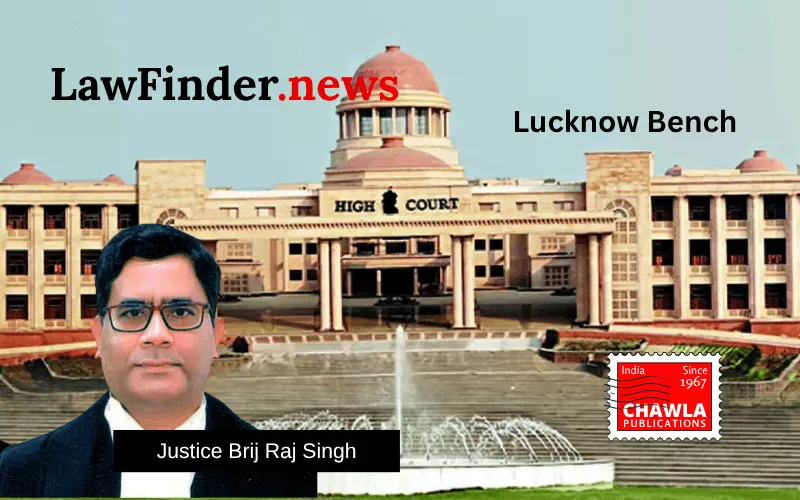
The High Court, led by Justice Brij Raj Singh, examined the magistrate's discretion in such matters. The court highlighted that under Section 175(3), a magistrate has multiple options: to order an FIR, treat the application as a complaint, or direct a police investigation if necessary. The court emphasized that such decisions depend on the nature of the allegations and the evidence available.
The ruling reiterated that while FIR registration is crucial in sexual offence cases, especially when evidence like CCTV footage is involved, a magistrate is not bound to order an FIR if the complainant possesses all necessary evidence. The court noted that the magistrate acted within legal bounds, as Roli could present her evidence through court proceedings.
The judgment underscores the need for judicial discretion to prevent misuse of the legal process while ensuring justice for victims. The decision also provides clarity on the application of the Bharatiya Nagarik Suraksha Sanhita, 2023, in handling applications under Section 175(3).
The court dismissed Roli's application, affirming the magistrate's initial decision and directing the circulation of the judgment to all subordinate courts for guidance.
Bottom line:-
The Magistrate, under Section 175(3) of the Bharatiya Nagarik Suraksha Sanhita, 2023 (previously Section 156(3) Cr.P.C.), has discretionary power to either: (i) order registration of an FIR, (ii) treat the application as a complaint case, or (iii) direct police investigation if evidence requires thorough inquiry, depending on the nature of allegations and the evidence available.
Statutory provision(s): Section 175(3) of Bharatiya Nagarik Suraksha Sanhita, 2023, Section 223 of Bharatiya Nagarik Suraksha Sanhita, 2023, Section 528 of Bharatiya Nagarik Suraksha Sanhita, 2023, Section 173(4) of Bharatiya Nagarik Suraksha Sanhita, 2023, Section 154 of Cr.P.C., Section 156(3) of Cr.P.C., Section 190 of Cr.P.C., Section 202 of Cr.P.C., Section 203 of Cr.P.C., Section 200 of Cr.P.C.
Roli v. State of U.P., (Allahabad)(Lucknow) : Law Finder Doc id # 2901888