Madan Gopal Sinha's plea for discharge rejected; court finds prima facie evidence in book controversy involving insulting content against Islam.
In a significant judgment delivered on April 2, 2026, the Allahabad High Court has upheld the decision of the Additional Civil Judge, Ghazipur, refusing to discharge Madan Gopal Sinha from charges under Sections 153B and 295A of the Indian Penal Code (IPC). Sinha, who is named as the editor of the controversial book "Tankar Sawdhan Aage Yaha Visphotak," was accused of publishing content that allegedly insulted the religion of Islam.
The case dates back to 2004 when the book was published, leading to a police complaint under Case Crime No. 272 of 2004 at the Karanda Police Station in Ghazipur. The allegations included the publication of words deemed insulting to the religion of Islam, purportedly intended to disturb religious harmony. The book was reportedly published at the instance of Yashu Ji Maharaj, with Madan Gopal Sinha named as the editor, which became a focal point of the charges.
During the criminal revision proceedings, Sinha's counsel argued that the investigation had not been conducted properly and contended that Sinha was falsely implicated based solely on his name appearing as the editor of the book. It was asserted that there was no substantive material to establish Sinha’s editorial role beyond the name mentioned on the book.
However, opposing counsel for the State highlighted that several copies of the book were recovered and that Sinha's name was indeed listed as the editor, pointing to prima facie evidence of his involvement. The State maintained that the content of the book was likely to outrage religious feelings and insult religious beliefs, thus constituting offenses under the relevant sections of the IPC.
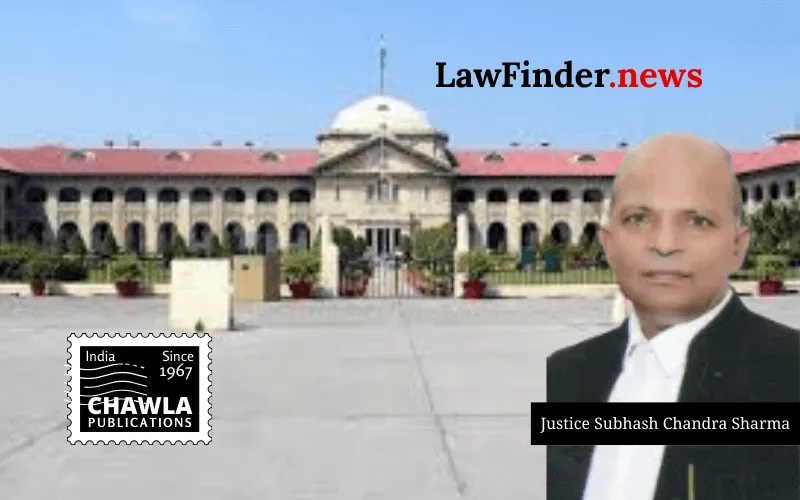
The Honorable Justice Subhash Chandra Sharma, in his judgment, emphasized that at the stage of framing charges, the court's role is to assess the prima facie case based on the materials available, rather than conducting a detailed scrutiny akin to a trial. Justice Sharma noted that the trial court had duly considered the provisions of Sections 153B and 295A IPC and the materials collected during the investigation before arriving at its decision.
Section 153B IPC pertains to imputations prejudicial to national integration, while Section 295A IPC deals with deliberate and malicious acts intended to outrage religious feelings. The court found that the prima facie case was established against Sinha, confirming the trial court’s decision to dismiss the discharge application.
Justice Sharma ruled that there was no impropriety or illegality in the trial court's order dated June 10, 2025, which had rejected Sinha's application for discharge. Consequently, the criminal revision filed by Sinha was dismissed, reinforcing the legal proceedings against him as the case moves forward to trial.
This judgment underscores the judiciary's stance on matters concerning religious sentiments and the publication of potentially inflammatory content. It serves as a reminder of the legal obligations editors and publishers have in ensuring that published material does not contravene established laws safeguarding religious harmony.
Bottom Line:
Criminal Revision against dismissal of discharge application - Offence under Sections 153B and 295A IPC - Prima facie case established against the revisionist as the editor of a book containing insulting statements regarding religion - Trial court's order refusing discharge upheld.
Statutory provision(s): Section 239 of the Criminal Procedure Code, 1973, Sections 153B and 295A of the Indian Penal Code, 1860.
Madan Gopal Sinha v. State of U.P., (Allahabad) : Law Finder Doc id # 2880333