Court Directs State Government to Redefine Criteria for Dependency and Financial Indigency in Public Employment
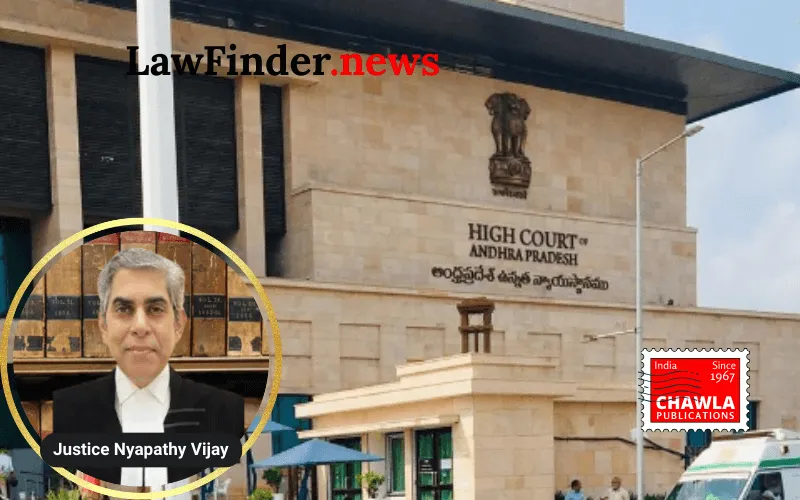
In a significant ruling, the Andhra Pradesh High Court has instructed the State Government to overhaul its guidelines concerning compassionate appointments, emphasizing the need for precise definitions of "dependency" and "financial indigency" as essential criteria. The judgment, delivered by Justice Nyapathy Vijay, addressed a writ petition filed by Gogutattu Sujana, who sought compassionate appointment following the demise of her father, a Library Assistant, on grounds of financial distress.
The petitioner, married before her father's death and claiming dependency on his income, faced objections from the State, which contended that compassionate appointments are not an inherent right but a measure to alleviate financial distress. The State highlighted that an ex-gratia amount is typically provided to dependents, varying from Rs. 5,00,000 to Rs. 10,00,000, depending on the employee's designation, as per G.O.Ms.No.114.
Justice Vijay underscored the principle that compassionate appointments are exceptions to the constitutional mandate of equality in public employment, as stipulated under Article 16. The court expressed concern over the staggering number of compassionate appointments made in the state-20,801 since 2014-suggesting that this exception is becoming the norm, thereby undermining the rights of other unemployed youth awaiting public employment opportunities.
The court mandated that the term "dependent" be confined to those whom the deceased was legally obligated to support, such as immediate family members, and emphasized that mere benevolence by the deceased does not extend this right. Furthermore, the court stressed that financial indigency must be absolute and not merely a reduction in living standards due to the employee's death.
In line with the Supreme Court's precedents, the judgment asserted that compassionate appointments should be reserved for families in dire financial straits, akin to "hand-to-mouth" situations. The court also suggested that the government consider offering ex-gratia payments based on a formula reflecting the deceased’s salary and remaining service years, rather than fixed amounts, to address the immediate financial needs of the bereaved families.
The court provided the State with a three-month window to redraft its compassionate appointment guidelines, incorporating these directives. It also recommended exploring temporary employment solutions, such as outsourcing, to address the peculiar needs of families without resorting to regular employment, thus maintaining the integrity of the public employment system.
This directive aims to balance the immediate financial relief for bereaved families with the fundamental right to equal employment opportunities for all citizens, ensuring that public employment policies serve the greater good of society.
Bottom Line:
Compassionate appointment requires dependency and financial indigency of the dependents. Excessive compassionate appointments can violate the principle of equality in public employment.
Statutory provision(s): Article 16 of the Constitution of India.
Gogutattu Sujana v. State of Andhra Pradesh, (Andhra Pradesh) : Law Finder Doc id # 2881036