Court Directs APSRTC to Promote Fairness and Transparency in Future Tenders, Prohibiting Multiple Licenses to Single Bidders
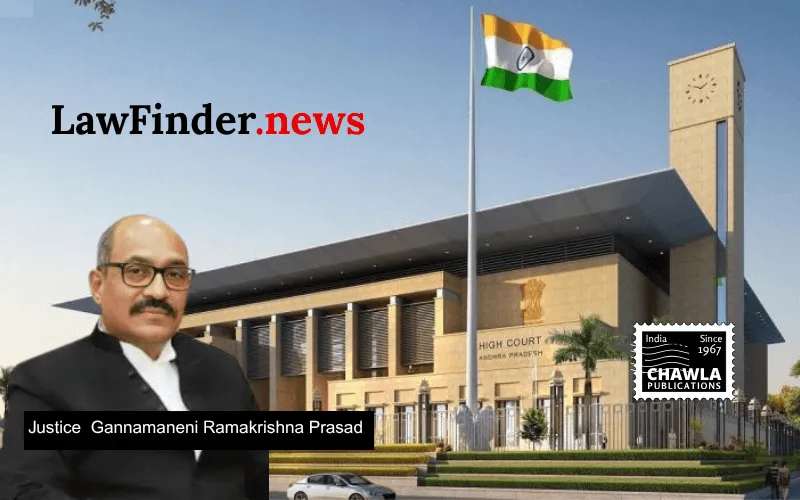
The Andhra Pradesh High Court, in a significant ruling on January 5, 2026, quashed the tender notification issued by the Andhra Pradesh State Road Transport Corporation (APSRTC) on January 4, 2024, for open spaces at the Yerraguntla Bus Station. Justice Gannamaneni Ramakrishna Prasad, presiding over the case involving multiple writ petitions filed by V. Rabbani Basha, directed APSRTC to ensure that future tenders are designed to prevent a single individual from obtaining more than one license, thereby promoting fairness and transparency.
The case stems from allegations that APSRTC had granted multiple open spaces to a single individual, fostering monopoly and vested interests contrary to public interest and constitutional principles under Articles 38 and 39. The petitioner, V. Rabbani Basha, had licenses for several open spaces but faced termination orders for non-compliance with licensing conditions, including sub-letting to third parties. The termination prompted a fresh tender notification by APSRTC, which Basha challenged in the writ petition.
The court emphasized the role of the state as a trustee of public wealth, asserting that state actions must be fair, reasonable, and non-arbitrary to ensure equitable distribution of resources. The judgment criticized the practice of allocating multiple open spaces to a single individual, highlighting its potential to create vested interests and monopolies, violating constitutional mandates for equitable resource distribution.
This decision mandates APSRTC to revise its tendering process, ensuring that public resources are distributed in a manner that serves the common good and minimizes inequalities. The court's directive aligns with constitutional principles aimed at securing a social order for the promotion of welfare and minimizing income inequalities.
Bottom Line:
State largesse - Allotment of multiple open spaces to a single individual is deprecated as it fosters monopoly and vested interests, contrary to public interest and constitutional principles under Articles 38 and 39.
Statutory provision(s): Articles 14, 19, 21, 38, 39 of the Constitution of India.
V.Rabbani Basha v. State of Andhra Pradesh, (Andhra Pradesh) : Law Finder Doc id # 2839824