The court emphasizes compliance with Supreme Court precedent, rejecting the applicability of state rules for video conferencing at reconciliation stages.
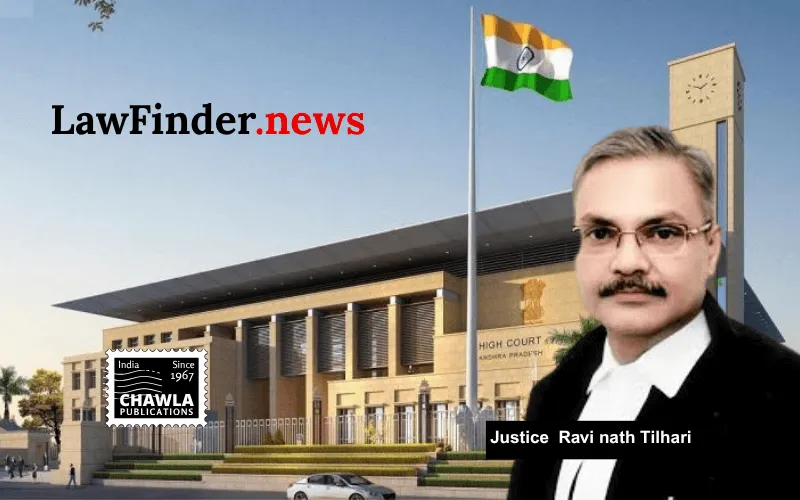
In a significant ruling, the Andhra Pradesh High Court has dismissed a civil revision petition filed by Bheemisetti Suryanarayana, seeking to participate in reconciliation proceedings via video conferencing due to his residence in Texas, USA. The judgment, delivered by Justice Ravi Nath Tilhari, reinforces the binding precedent set by the Supreme Court in Santhini v. Vijaya Venketesh (2018) 1 SCC 1, which prohibits video conferencing at the reconciliation stage in matrimonial disputes.
The petitioner had requested permission to appear through virtual platforms such as Zoom, WhatsApp, or Skype, citing inability to travel to India due to employment constraints. However, the trial court dismissed his application, prompting the revision petition. Counsel for the petitioner argued that the "Rules for Video Conferencing for Courts, 2023" should allow such participation, claiming these rules authorize video conferencing at all stages of judicial proceedings.
Justice Tilhari clarified that procedural rules cannot override or alter statutory provisions or Supreme Court judgments. He emphasized the importance of in-person reconciliation efforts in matrimonial disputes, as mandated by the Family Courts Act, 1984, and the Hindu Marriage Act, 1955, which require proceedings to be held in camera to protect the confidentiality and sensitivity involved.
The court further stated that the rules framed under Article 227 of the Constitution do not possess the authority to change the law declared by the Supreme Court. The judgment highlighted that any legislative change to nullify the effect of a judicial decision must be enacted by Parliament or the State Legislature, not through procedural rules.
Justice Tilhari concluded that video conferencing at the reconciliation stage remains impermissible until reconciliation efforts fail, aligning with the Supreme Court's directive in Santhini. The ruling underscores the judiciary's obligation to uphold established legal principles and ensure consistency across jurisdictions.
Bottom line:-
Video conferencing is not permissible in matrimonial disputes at the stage of reconciliation, whether before a Family Court or a Civil Court, as per the binding precedent of the Supreme Court in Santhini v. Vijaya Venketesh (2018) 1 SCC 1. Andhra Pradesh High Court "Rules for Video Conferencing for Courts, 2023" do not override or dilute the applicability of the Supreme Court judgment.
Statutory provision(s):
- Family Courts Act, 1984
- Hindu Marriage Act, 1955
- Constitution of India - Article 227
- Supreme Court precedent (Santhini v. Vijaya Venketesh, 2018)