Court Sets Aside Lower Court's Order, Permits Re-examination Without Permission if Explaining Cross-examination Matters
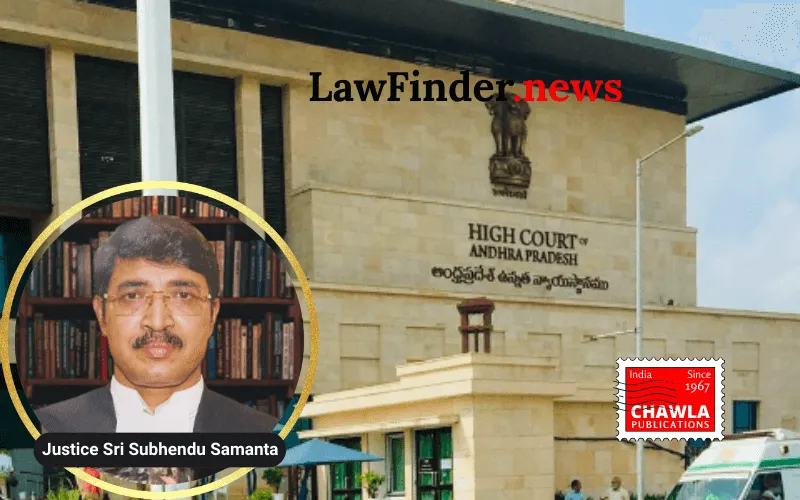
In a significant ruling, the Andhra Pradesh High Court has reinforced the statutory right of parties to re-examine witnesses without requiring court permission if the re-examination pertains to matters already referred to during cross-examination. The judgment, delivered by Justice Subhendu Samanta, addressed the appeal filed by Pv Rajalakshmi against the order of the III Additional Judicial Magistrate of First Class, Tirupati, which had denied the re-examination of a witness in a long-pending case.
The case, originating from a petition under Section 138 of the Negotiable Instruments Act, experienced a protracted timeline with the examination-in-chief occurring in 2012 and the cross-examination concluding only in 2025 after five intervals. The petitioner sought re-examination to clarify issues raised during cross-examination, which the trial court initially denied, prompting the appeal.
Justice Samanta's judgment cited Sections 137 and 138 of the Indian Evidence Act, 1872, which outline the procedural framework for witness examination, cross-examination, and re-examination. The court emphasized that re-examination is a statutory right aimed at explaining matters brought up in cross-examination. Permission from the court is necessary only when new facts or issues are introduced during re-examination.
The judgment referenced Supreme Court precedents, including Vinod Kumar v. State of Punjab and Rammi Alias Rameshwar v. State of M.P., underscoring the importance of timely cross-examinations and the broader scope of re-examination beyond merely resolving ambiguities.
In setting aside the lower court's order, the High Court directed that re-examination be allowed in the form of an affidavit, with provisions for the opposing party to cross-examine if new matters are introduced. The ruling aims to expedite the judicial process while ensuring comprehensive examination of witnesses to elicit truth and justice.
The judgment also addressed procedural delays, noting the 14-year duration of the case and the necessity of swift resolution. The court permitted the petitioner to submit a written affidavit detailing the re-examination, including any new documents, within two weeks, ensuring both parties have adequate opportunity to address the issues comprehensively.
As the case progresses, the respondents have indicated intentions to file a compromise application, which remains a decision for the trial court.
This ruling underscores the judiciary's commitment to upholding statutory rights and procedural fairness, reinforcing the ability of parties to fully explore the evidence through re-examination, thus promoting a fair trial process.
Bottom line:-
Re-examination of a witness under Section 138 of the Evidence Act is a statutory right of the party calling the witness and the Court cannot restrain such re-examination when it pertains to explaining matters referred to in cross-examination. Permission of the Court is required only when new facts or issues are introduced during re-examination.
Statutory provision(s): Sections 137, 138 of the Evidence Act, 1872
Pv Rajalakshmi v. G V Srinivas Rao, (Andhra Pradesh) : Law Finder Doc id # 2894496