Allahabad High Court Highlights Involvement and Requirement for Custodial Interrogation
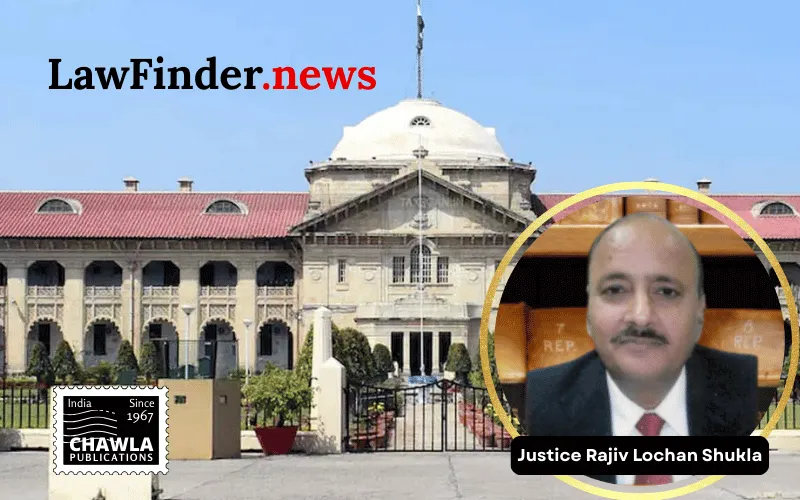
In a significant ruling, the Allahabad High Court has denied anticipatory bail to Kishan Yadav, who is accused in a case involving the alleged assault and subsequent directives for the disposal of a deceased individual. The decision was delivered by Justice Rajiv Lochan Shukla, emphasizing the necessity for custodial interrogation due to the apparent involvement of the applicant in the crime.
The case, registered under Section 105 of the Bharatiya Nyaya Sanhita, 2023, pertains to an incident where Yadav is accused of assaulting a deceased individual and instructing co-accused to confine and later dispose of the victim. The prosecution's case heavily relies on confessional statements from co-accused implicating Yadav.
The defense counsel argued that Yadav's implication is solely based on these confessional statements, which, as per Supreme Court observations, should not be admissible as evidence in the charge-sheet. They further contended that there is no direct evidence, such as eyewitnesses or CCTV footage, linking Yadav to the crime scene.
However, the court, while acknowledging the Supreme Court's stance on the inadmissibility of confessional statements in charge-sheets, clarified that such statements could still guide police investigations. Justice Shukla noted that these confessions, although not admissible in trial, can lead to the discovery of new facts, which could be used as evidence.
The judgment underscored the need for Yadav's custodial interrogation, citing the severity of the crime and the necessity to uncover further details. The court also noted that the involvement of Yadav, as suggested by the confessional statements, necessitates thorough investigation.
The court's decision comes in light of a previous Supreme Court ruling in "Sanju Bansal v. The State of Uttar Pradesh," which criticized the inclusion of confessional statements in charge-sheets. Despite this, the Allahabad High Court maintained that such statements could not be entirely disregarded during investigations.
The rejection of anticipatory bail highlights the judiciary's stance on ensuring thorough investigation in cases involving serious allegations. Yadav's legal team may pursue regular bail, which will be evaluated on its merits, independent of this order's observations.
Bottom Line:
Anticipatory bail denied due to involvement of applicant in alleged assault and directions to co-accused for confinement and disposal of deceased based on confessional statements, while emphasizing Supreme Court's observations regarding inadmissibility of confessional statements in charge-sheet.
Statutory provision(s): Bharatiya Nyaya Sanhita, 2023 Section 105
Kishan Yadav v. State of U.P., (Allahabad) : Law Finder Doc id # 2873409