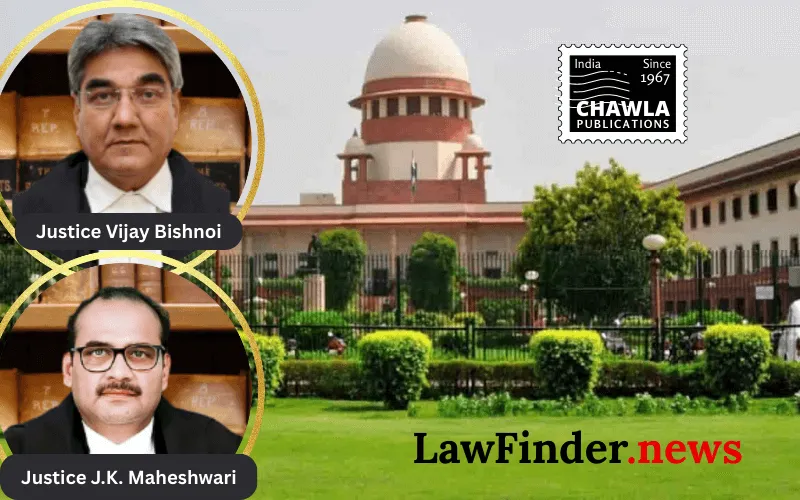
In Landmark Judgment, SC Upholds Central Government’s Exclusive Power to Prescribe Qualifications Under Drugs and Cosmetics Act, Strikes Down State Rules Adding Experience as Essential Criterion
In a significant decision delivered on January 13, 2026, the Supreme Court of India has ruled that the power to prescribe qualifications for appointment as Drug Inspectors (DI) or Drug Control Officers (DCO) lies exclusively with the Central Government under the Drugs and Cosmetics Act, 1940 (“D&C Act”) and the Drugs and Cosmetics Rules, 1945 (“Drug Rules”). The Court struck down the State Government rules of Haryana and Karnataka, which prescribed additional qualifications, particularly experience in manufacturing or testing of Schedule C drugs, as essential criteria for appointment to these posts.
The judgment arose from a batch of appeals challenging the power of State Governments to frame rules under the proviso to Article 309 of the Constitution of India, prescribing qualifications different from those prescribed by the Central Government under Rule 49 of the Drug Rules. Both Haryana and Karnataka had issued recruitment advertisements and rules that made “experience” a mandatory qualification for DI/DCO appointments, beyond the educational qualifications stipulated by the Central Government.
The Supreme Court examined the legislative history and constitutional provisions governing the appointment and qualifications of Drug Inspectors. It noted that the D&C Act is a central legislation enacted with the concurrence of provincial legislatures during British India and continues to be binding under Article 372 of the Constitution. The Act empowers the Central Government under Section 33(2)(b) to prescribe qualifications of Inspectors by making rules, which is reflected in Rule 49 of the Drug Rules.
The Court observed that while both Central and State Governments have the power to appoint Drug Inspectors under Section 21 of the D&C Act, the qualification for appointment is exclusively prescribed by the Central Government via statutory rules. The “experience” mentioned in the proviso to Rule 49 pertains only to authorization to inspect the manufacture of Schedule C substances and is not a qualification for initial appointment.
The Court relied on precedents, including a Full Bench of the Allahabad High Court and the Delhi High Court judgment in Union Public Service Commission v. Nidhi Pandey, which held that the experience requirement in the proviso to Rule 49 is not a condition of eligibility for appointment but a condition for authorization to inspect certain substances post-appointment.
Applying the doctrine of “occupied field,” the Court held that once the Central Government has legislated on a subject under the Concurrent List, the State Governments cannot legislate or prescribe qualifications inconsistent with or additional to the central rules. The power exercised by the States under the proviso to Article 309 of the Constitution to frame service rules cannot override a central law occupying the field.
The Court dismissed the appeals filed by the States of Haryana and Karnataka but allowed the appeal filed by an unsuccessful candidate, Parveen Kumar. It directed the respective Public Service Commissions to redraw the selection lists by considering only those candidates possessing qualifications as prescribed under Rule 49 of the Drug Rules, ignoring the additional experience requirements prescribed by the State Rules.
Importantly, the Court permitted continuation in service of those already appointed by Haryana if they fall within the merit as per the new selection lists. For those who do not qualify, the State may continue their employment only against supernumerary posts, placing them at the bottom of the seniority list.
This judgment firmly establishes the primacy of the Central Government’s rules in regulating qualifications for Drug Inspector appointments, upholding the uniformity and consistency intended by the D&C Act. It clarifies that States cannot add experience or other qualifications as eligibility criteria beyond those prescribed by the Central Government unless they amend the central legislation accordingly.
Statutory provision(s): Drugs and Cosmetics Act, 1940 - Sections 6(2), 12, 21, 22, 33, 33N, 38; Drugs and Cosmetics Rules, 1945 - Rule 49, Rule 51, Rule 52; Constitution of India - Article 309, Article 372, Article 254; Government of India Act, 1935 - Section 103
State of Haryana v. Krishan Kumar, (SC) : Law Finder Doc Id # 2838768