Supreme Court Overturns Punjab High Court's Decision, Allows Impleadment in Building Rules Case, Chopra Hotels Private Limited gains right to be heard in proceedings affecting its property under Punjab Unified Building Rules, 2025.
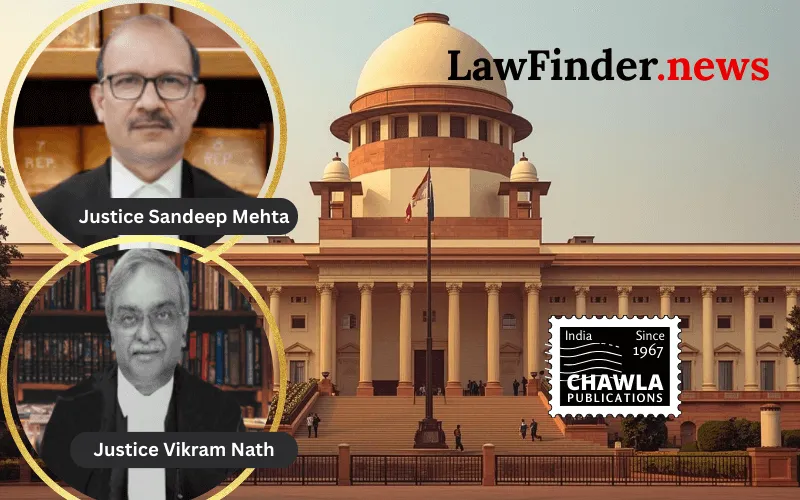
In a significant ruling, the Supreme Court of India has overturned a decision by the Punjab and Haryana High Court, granting M/s Chopra Hotels Private Limited the right to be impleaded in ongoing proceedings concerning the Punjab Unified Building Rules, 2025. The bench, comprising Justices Vikram Nath and Sandeep Mehta, delivered the judgment on April 8, 2026, emphasizing the appellant's direct and demonstrable impact by the interim order passed by the High Court.
The appeal arose from the High Court's dismissal of applications for impleadment and clarification/modification of an interim order that had kept certain provisions of the 2025 Rules in abeyance. This order had been leveraged by municipal authorities to deny the appellant's building the benefits of the new rules, leading to a demolition order.
The Supreme Court underscored that the appellant, although not an original party to the writ petition challenging the 2025 Rules, was directly affected by the High Court’s interim order. The Court noted that the appellant was not a stranger to the controversy but a proper party whose presence would enable the Court to better address the consequences of its interim order.
The apex court's decision mandates the High Court to proceed independently with related appeals and revision petitions, ensuring that the rights of Chopra Hotels are duly considered under the 2025 Rules. The Supreme Court has also directed the maintenance of the status quo regarding the property in question until all relevant proceedings are resolved by the High Court.
This ruling clarifies the principles of impleadment, reinforcing that individuals or entities directly impacted by judicial orders have the right to be heard, even if not initially part of the legal challenge. This decision is expected to have broader implications for similar cases, where interim orders affect parties not originally involved in the proceedings.
Bottom Line:
Principles governing impleadment under Article 226 of the Constitution of India - A person directly and demonstrably affected by an interim order is entitled to be heard even if not an original party to the proceedings.
Statutory provision(s):
- Constitution of India, Article 226
- Civil Procedure Code, 1908, Order I Rule 10
- Punjab Unified Building Rules, 2025
- Punjab Municipal Corporation Act, 1976, Section 269
M/s Chopra Hotels Private Limited v. Harbinder Singh Sekhon, (SC) : Law Finder Doc id # 2879846