Supreme Court Modifies Life Sentence for Bihar Convicts After 35 Years, Grants Juvenility Benefit to One, Ganesh Yadav to be Released Immediately; Umesh Yadav and Others' Sentences Reduced to 14 Years of Imprisonment
In a landmark decision, the Supreme Court of India has modified the life sentences of several appellants involved in a decades-old criminal case, citing the passage of time and the appellants' age. The case, originally tried in 1988, involved the conviction of eight individuals under Sections 302/149 and 323/149 of the Indian Penal Code for their involvement in a violent incident in Bihar.
The appellants, including Umesh Yadav and Ganesh Yadav, had challenged their convictions in the High Court, which upheld the trial court's decision. However, upon appeal to the Supreme Court, new arguments emerged regarding the juvenility of some appellants at the time of the incident.
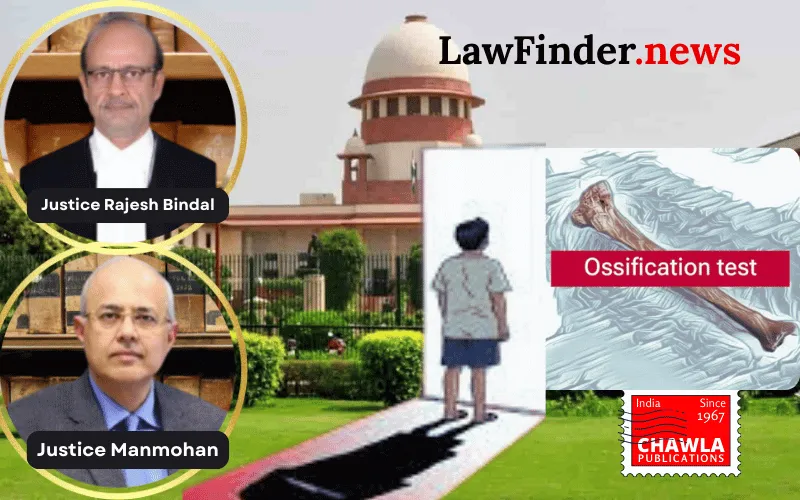
Ganesh Yadav, one of the appellants, successfully claimed the benefit of juvenility. The Supreme Court, guided by established legal principles and an ossification test, determined that Ganesh Yadav was likely 17 years old when the crime occurred. As per the Juvenile Justice (Care and Protection of Children) Act, 2015, a juvenile can only be detained for a maximum of three years in a special home. With Ganesh Yadav already having served over eight years, the Court ordered his immediate release, provided he is not required in any other case.
The Court did not extend the same benefit to Umesh Yadav, Ganesh's elder brother, due to discrepancies in age-related documentation. The Court concluded that Umesh Yadav was not a juvenile at the time of the offense.
The Supreme Court also addressed the sentences of other appellants, notably Baleshwar Pandit and Muneshwar Pandit, considering the extended period of time since the incident and their current ages of 67 and 59, respectively. The Court reduced their life sentences to a fixed term of 14 years, acknowledging their conduct during custody and the elapsed time since the crime occurred.
The decision reflects the Court's consideration of both legal precedents and humanitarian factors, balancing the severity of the original crime with the appellants' rehabilitation and age. This judgment is set to impact future considerations of juvenility claims and sentence modifications in prolonged cases.
Bottom Line:
Benefit of juvenility can be granted based on age determined by ossification test, considering margin of error of two years on either side, as per established legal principles.
Statutory Provisions: Juvenile Justice (Care and Protection of Children) Act, 2015 Section 18, Indian Penal Code, 1860 Sections 302/149, 323/149
Umesh Yadav v. State of Bihar, (SC) : Law Finder Doc id # 2811670