Mumbai, Apr 13 The Bombay High Court has referred a legal question to a larger bench to determine if the state can deny furlough to prisoners convicted under special statutes, such as MCOCA and POCSO Act, and observed that such restrictions violate fundamental rights.
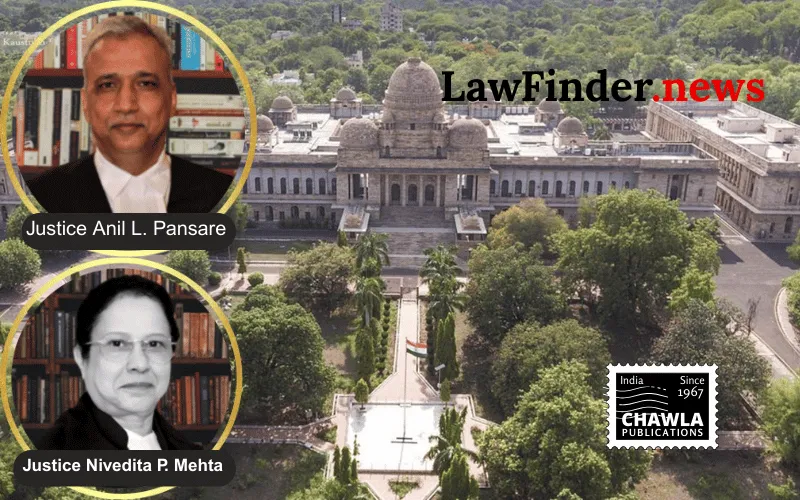
The order was delivered on April 10 by the Nagpur bench of Justices Anil Pansare and Nivedita Mehta, on a petition filed by Rohit Tangappa Joseph, an aide of gangster Chhota Rajan, who has been convicted of killing journalist J Dey.
The division bench cited conflicting previous judgments as the reason for seeking a definitive ruling from the larger bench and directed the plea to be placed before the HC's Chief Justice for appropriate orders.
Joseph had moved the high court after the Amravati prison authorities refused his application seeking furlough, relying on a December 2024 amendment to parole and furlough rules that created a blanket ban on furlough for those convicted under specific statutes and serious offences.
The Maharashtra government had amended the Maharashtra Prisons (Furlough and Parole) Rules under which furlough was restricted to prisoners convicted for serious offences or under special statutes like the Maharashtra Control of Organised Crime Act (MCOCA), Protection of Children from Sexual Offences (POCSO) Act and others.
The high court, in its order, questioned how one can presume that persons convicted under special Acts for serious offences will not face the detrimental impact of continuous captivity in prison.
If the eligibility of prisoners for furlough is to be based only on a specific offence, then it would be against the objective behind granting furlough, the HC remarked.
The court noted that denying furlough based on a convict's conduct or behaviour in jail or to safeguard societal interest may be justified, but to put restrictions on prisoners, who are convicted for a specific offence, would defeat the purpose or objective of granting furlough.
Restricting furlough only because the prisoner has been convicted under a specific Act was violative of the fundamental rights, and such an approach would be counter-productive to the reformative approach, the court opined.
While furlough was a conditional privilege that may be restricted, imposing a blanket prohibition based solely on the nature of the offence in which an accused is booked or convicted would undermine the very objective for which furlough is granted, it noted.
"The objective of furlough is to enable prisoners to remain in touch with their families and deal with family matters, to provide relief from the detrimental impact of continuous captivity in prison and to enable prisoners to remain hopeful about their future and have an active interest in life," the HC said.
If restrictions are imposed based on conviction under special statutes, then one will have to presume that these prisoners are not entitled to remain in touch with their families, it pointed out.
"We do not find any rational as to why should prisoners, irrespective of the fact that they are convicted under a particular Act, be not permitted to remain in touch with their families, and/or remain hopeful about their life and future," the court said.
In organised crime syndicate cases, the crime is normally committed at the instance or instructions of the head of the syndicate and the members play different roles.
If they are all convicted, then to treat them all at par for the purpose of deciding eligibility for furlough would amount to treating unequals as equals. It creates a class within a class of persons, the HC observed.
Joseph was convicted on charges of murder and criminal conspiracy under the Indian Penal Code and relevant provisions of the MCOCA and sentenced to life imprisonment. He had sought furlough for a period of 28 days to meet his family due to some emergency.
Apart from Joseph, gangster Chhota Rajan and seven others were also convicted in the case.
Dey was shot dead near his house in Mumbai's Powai area by two motorcycle-borne persons on June 11, 2011.
As per the prosecution, Rajan ordered the shooting as he was irked with Dey's articles against him.