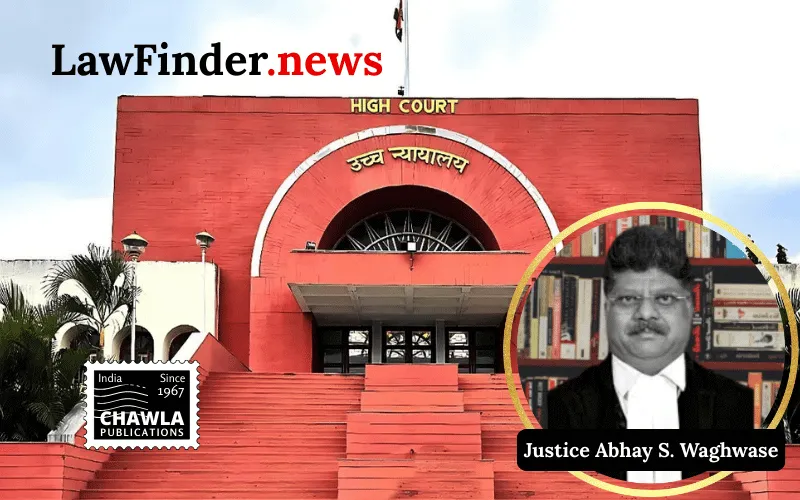
Aurangabad Bench overturns lower courts' convictions, emphasizing lack of expert testimony and chain of custody issues in forgery allegations.
In a significant development, the Bombay High Court's Aurangabad Bench has acquitted Madhav, who was previously convicted for forgery and the use of a forged document under Sections 465 and 471 of the Indian Penal Code (IPC). The judgment, delivered by Justice Abhay S. Waghwase, emphasized the lack of conclusive evidence and procedural lapses that rendered the prosecution's case weak.
Madhav was initially convicted by the Judicial Magistrate First Class (JMFC), Dharmabad, and the conviction was upheld by the Additional Sessions Judge, Biloli. The charges stemmed from allegations that Madhav, while serving as a Talathi, had altered land records to facilitate the illegal conversion of agricultural land from class-2 to class-1, which led to the execution of a sale deed based on forged 7/12 extracts.
The High Court, upon revisiting the evidence, noted several critical lapses. One of the primary issues was the absence of expert handwriting analysis to definitively link Madhav to the alleged forgery. The court observed that the prosecution failed to establish beyond reasonable doubt that Madhav authored or tampered with the questioned documents, as no expert testimony was provided to substantiate the claim of forgery.
Moreover, the court highlighted the problematic chain of custody concerning the forged documents. The documents, which were allegedly altered, were seized from a witness (PW 6) rather than directly from Madhav, raising doubts about the integrity and authenticity of the evidence presented.
The court further criticized the prosecution's reliance on hearsay evidence and the lack of direct evidence linking Madhav to the act of forgery. It was noted that the informant (PW 2), who initiated legal action, admitted in cross-examination that he did not know who committed the forgery and had not personally witnessed any illegal act.
In light of these findings, Justice Waghwase concluded that both the trial court and the appellate court failed to appreciate the evidence correctly and erred in convicting Madhav. The High Court's decision underscores the importance of rigorous evidence and procedural compliance in criminal cases, especially when dealing with allegations of forgery.
The judgment has significant implications for the administration of justice, particularly in cases involving forgery and the use of forged documents. It reiterates the necessity for the prosecution to establish guilt beyond reasonable doubt and to present clear, conclusive evidence, including expert testimonies where applicable.
Bottom Line:
Revisional jurisdiction under Section 397 CrPC is limited and cannot be exercised routinely. Conviction under Sections 465 and 471 IPC requires proof of forgery and the use of a forged document with knowledge of its falsity.
Statutory provision(s): Sections 465, 471, and 468 of the Indian Penal Code, Section 397 of the Criminal Procedure Code.
Madhav v. State of Maharashtra, (Bombay)(Aurangabad Bench) : Law Finder Doc id # 2854712