Conviction under IPC Sections 498-A and 304-B Overturned Due to Lack of Evidence
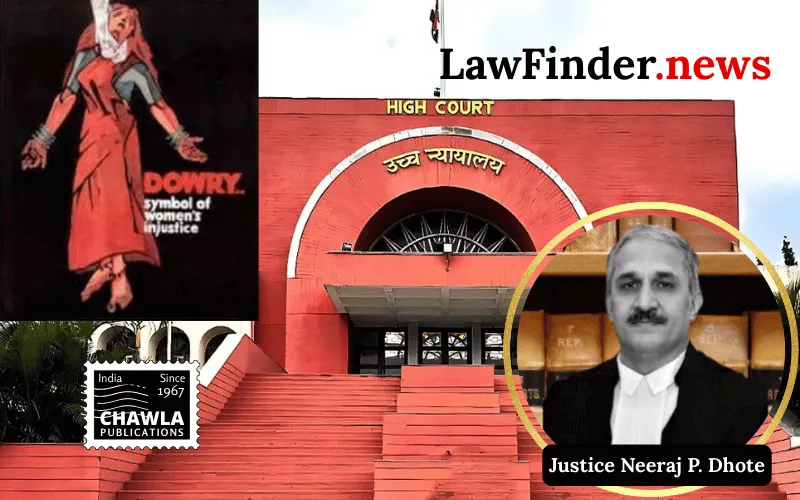
Aurangabad Bench of the Bombay High Court, presided over by Justice Neeraj P. Dhote, has overturned the conviction of Rajkumar Bhagat and others, previously found guilty under various sections of the Indian Penal Code (IPC) including 498-A and 304-B, in a case concerning the alleged dowry death of Sudeshna Bhagat. The judgment, delivered on December 16, 2025, found that the prosecution failed to establish the necessary evidence to prove cruelty and abetment to suicide, leading to the acquittal of the appellants.
The case revolved around the tragic suicide of Sudeshna Bhagat, who threw herself in front of a running train on November 12, 2014. Her husband, Rajkumar Bhagat, and his family were accused of subjecting her to harassment and demanding dowry, which allegedly led to her suicide. The trial court had previously convicted the appellants, sentencing them to rigorous imprisonment based on circumstantial evidence and a disputed suicide note.
In re-appreciating the evidence, the High Court noted significant gaps and inconsistencies. Crucially, it found that frequent quarrels and Sudeshna's short temperament did not suffice to attract charges under Section 498-A IPC, which addresses cruelty by the husband or his relatives. The alleged suicide note, purportedly penned by Sudeshna, was found to be of questionable origin, with no conclusive proof linking the handwriting to the deceased. The testimony of a handwriting expert was deemed insufficient due to the lack of reliable comparison samples.
Furthermore, the court observed that Sudeshna was known to be short-tempered, and the evidence suggested she acted in a fit of anger rather than due to sustained cruelty or harassment. Witness statements, including those from neighbors and friends, failed to corroborate claims of systematic ill-treatment or demands for money. Material omissions and contradictions in witness testimonies further weakened the prosecution's case.
Justice Dhote's judgment highlighted the importance of substantive evidence in cases of alleged dowry deaths, emphasizing that the mere occurrence of quarrels does not equate to legal cruelty unless it is severe enough to drive a person to suicide. The court also raised doubts about the authenticity of the suicide note, which played a pivotal role in the trial court's conviction.
With these findings, the High Court ordered the immediate release of Rajkumar Bhagat and the other appellants, who had been incarcerated since their conviction. The court also directed the refund of any fines paid under the previous judgment and instructed the handling of muddemal articles as per the trial court's order.
This judgment underscores the judiciary's role in safeguarding against wrongful convictions, particularly in sensitive cases involving allegations of domestic violence and dowry demands. Legal experts have welcomed the ruling, noting that it reinforces the need for careful evaluation of evidence in criminal cases.
Bottom Line:
Conviction under Sections 498-A, 304-B, 323, 504, and 506 IPC overturned due to lack of substantive evidence proving cruelty, harassment, or abetment to suicide. Frequent quarrels and deceased's temperament not sufficient to attract charges under Section 498A IPC.
Statutory provision(s): Sections 498-A, 304-B, 323, 504, 506 IPC; Sections 313, 374(2) CrPC; Section 45 Indian Evidence Act
Rajkumar v. State of Maharashtra, (Bombay)(Aurangabad Bench) : Law Finder Doc Id # 2822471