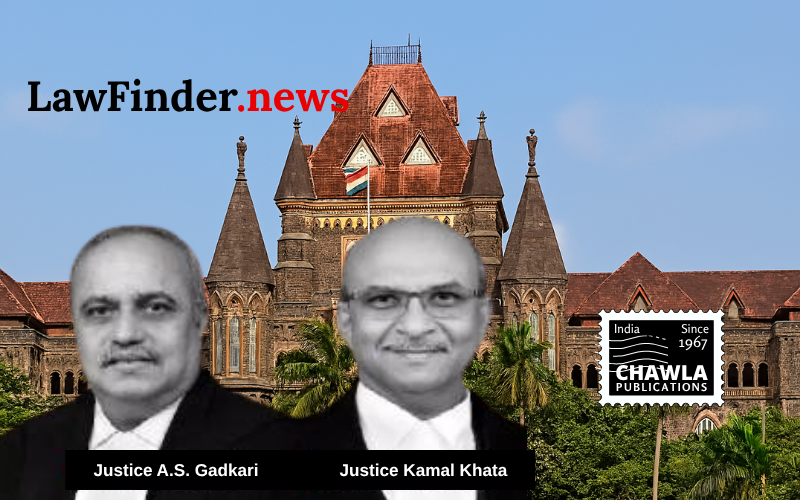
Court imposes costs on petitioner for abuse of process and directs inquiry into alleged irregularities in slum rehabilitation
In a significant ruling, the Bombay High Court has dismissed a review petition filed by Mumtaz H. Khoja against the Chief Executive Officer and others, concerning a slum rehabilitation scheme. The court found that the petitioner had suppressed material facts and made misrepresentations to gain undue advantage, thus abusing the process of the court. The court imposed a cost of Rs. 5,00,000 on the petitioner, directing it to be paid to the Armed Battle Casualties Welfare Fund.
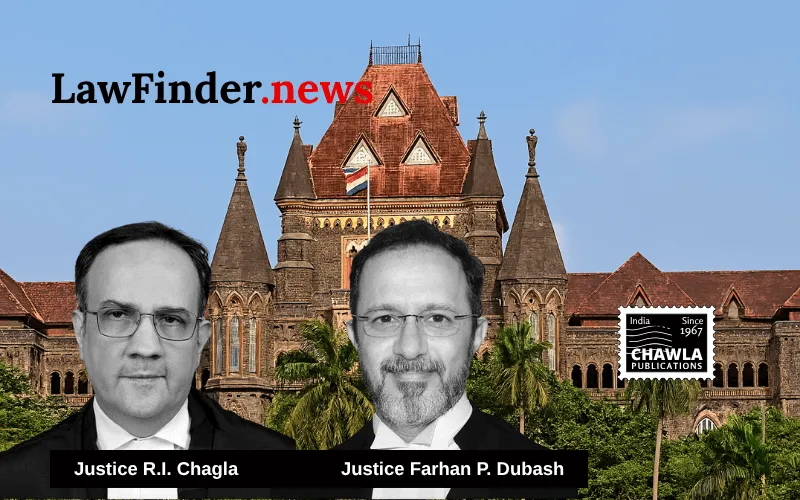
The division bench comprising Justices A.S. Gadkari and Kamal Khata emphasized that suppression of material facts and misrepresentation have no place in equitable jurisdiction, citing the Supreme Court's judgment in K.D. Sharma v. Steel Authority of India Limited. The petitioner, who had claimed entitlement to rehabilitation tenements under a slum scheme, was found to have concealed her possession of multiple premises and misrepresented her professional status.
The petitioner had sought a review of an earlier order, alleging that she was not allotted the rehabilitation tenement despite being eligible. However, the court noted that the petitioner failed to disclose her possession of multiple structures and her professional status as a doctor. The court observed that she had illegally occupied an area exceeding 2,200 sq. ft. in the slum, using one structure as her residence, another as a clinic, and a third for running a school under a trust.
The bench further directed the Brihanmumbai Municipal Corporation (BMC) and the Slum Rehabilitation Authority (SRA) to conduct an inquiry into the authorization of a school run by the trust in the slum, questioning the safety and legality of such operations.
In addition to dismissing the petition, the court directed the registry to issue a show cause notice to the petitioner for contempt of court for abusing the judicial process. The petitioner has been given until November 13, 2025, to respond to the notice.
This case underscores the court's commitment to maintaining the integrity of judicial proceedings and ensuring that individuals do not exploit the system through misrepresentation and concealment of facts.
Bottom Line:
Suppression of material facts, misrepresentation, and concealment of facts by the petitioner invoking equitable jurisdiction under Article 226 of the Constitution cannot be condoned. Such conduct amounts to abuse of the process of the court and disentitles the petitioner to any relief.
Statutory provision(s): Article 226 of the Constitution of India, Development Control & Promotion Regulation 2034 (DCPR), Maharashtra Land Revenue Code, 1966.
Mumtaz H. Khoja v. Chief Executive Officer, (Bombay)(DB) : Law Finder Doc Id # 2796278