In a significant ruling, the Bombay High Court sets aside an arbitration award citing violation of public policy and patent illegality under the Arbitration and Conciliation Act, 1996.
In a landmark judgment, the Bombay High Court has invalidated an arbitral award in the case of Manmohan Bhimsen Goyal and Others v. Madhuban Motors Pvt. Ltd., citing the unilateral appointment of the sole arbitrator as a violation of Section 12(5) of the Arbitration and Conciliation Act, 1996. The court held that such an appointment was in conflict with public policy and constituted patent illegality, rendering the arbitral proceedings and the award null and void.
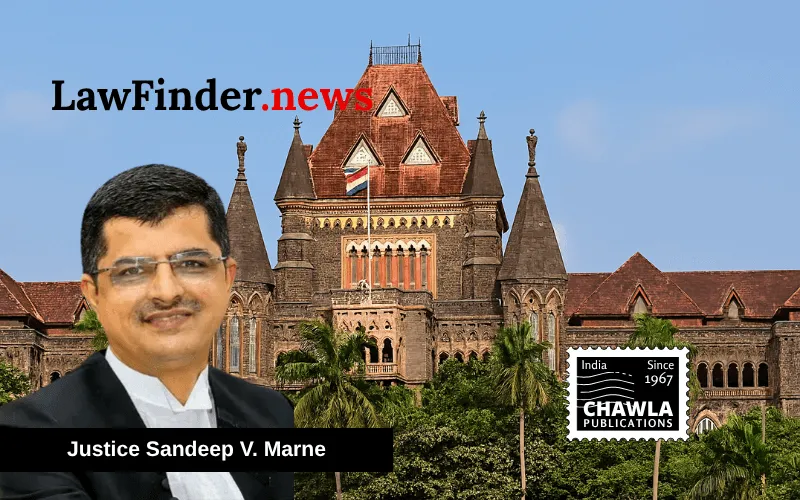
Justice Sandeep V. Marne presided over the case, which involved a dispute arising from a loan agreement dated November 1, 2014, between the petitioners, Manmohan Bhimsen Goyal and his wife, and the respondent, Madhuban Motors Pvt. Ltd. The dispute centered on the repayment of an outstanding loan amount, which led Madhuban Motors to invoke the arbitration clause in the loan agreement and unilaterally appoint an arbitrator.
The petitioners challenged the arbitral award, dated March 18, 2024, which favored Madhuban Motors by awarding them the claimed sum along with interest and arbitration costs. The petitioners contended that the unilateral appointment of the arbitrator by the respondent was invalid and breached the principles of neutrality, fairness, and transparency, as outlined in the Arbitration and Conciliation Act.
In its analysis, the court emphasized that the unilateral appointment of an arbitrator by one party without the consent of the other violated the principles enshrined in Section 12(5) of the Act. This section mandates that any person with a direct or indirect relationship with one of the parties, potentially compromising their independence or impartiality, is ineligible to act as an arbitrator. The court further clarified that the ineligibility of an arbitrator cannot be waived merely by participation in the arbitration proceedings or by filing pleadings.
The court referenced several Supreme Court judgments, including TRF Ltd. v. Energo Engineering Projects Ltd. and Perkins Eastman Architects DPC v. HSCC India Ltd., which established that a person having an interest in the dispute or its outcome cannot act as an arbitrator nor appoint another arbitrator.
In conclusion, the court ruled that the arbitral award was unenforceable due to its conflict with public policy and patent illegality. The judgment underscores the necessity for neutrality and fairness in arbitral proceedings and reinforces the statutory framework governing the appointment of arbitrators.
The decision has far-reaching implications for arbitration proceedings in India, highlighting the judiciary's stance on ensuring impartial and unbiased arbitral tribunals. Legal experts view this judgment as a reaffirmation of the principles of independence and impartiality in arbitration, setting a precedent for future cases involving similar issues.
Bottom Line:
Arbitration - Unilateral appointment of arbitrator violates Section 12(5) of the Arbitration and Conciliation Act, 1996 - Such appointment results in nullity of arbitral proceedings and award due to conflict with public policy and patent illegality.
Statutory provision(s): Arbitration and Conciliation Act, 1996, Sections 12(5), 34
Manmohan Bhimsen Goyal v. Madhuban Motors Pvt. Ltd., (Bombay) : Law Finder Doc Id # 2827560