Court Upholds Principles of Natural Justice, Directs State to Reassess Schools' Eligibility with Fair Hearing
In a landmark decision, the Bombay High Court's Circuit Bench at Kolhapur has quashed the Maharashtra Government's resolutions dated April 1 and April 2, 2026, which permanently disqualified several primary and secondary schools from receiving grant-in-aid. The court found that the government's actions violated the principles of natural justice by failing to provide affected schools an opportunity to be heard before issuing such drastic orders.
The case, titled Sahyadri Shikshan Sanstha, Sawarde v. State of Maharashtra, involved multiple writ petitions challenging the state government's resolutions that affected hundreds of schools, primarily in rural and Marathi-medium institutions. The government had justified its actions by citing the schools' repeated failure to meet assessment norms, as per a 2011 resolution, and instructed them to apply for recognition under the Maharashtra Self-Financed Schools Act by April 30, 2026, failing which their recognition would be automatically withdrawn.
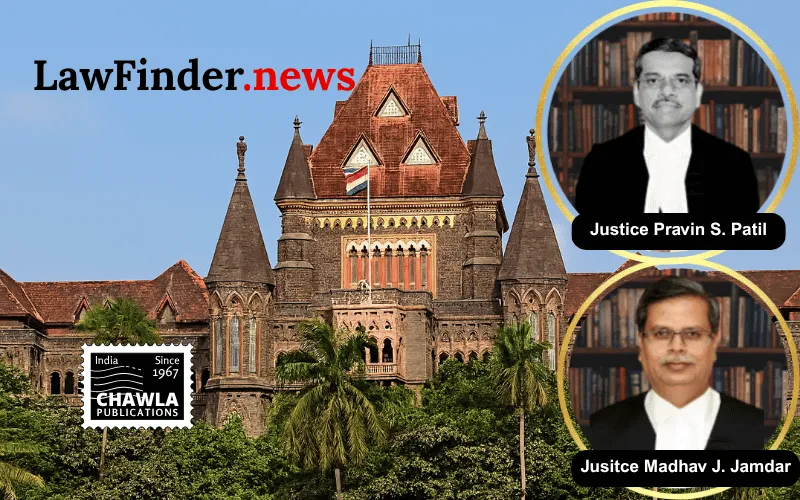
The petitioners, represented by various advocates, argued that the lack of a hearing before the disqualification amounted to arbitrary action. The court agreed, emphasizing that any adverse order must be informed by reasons and adhere to the rule of law. The bench, comprising Justices Madhav J. Jamdar and Pravin S. Patil, underscored the necessity for the government to follow due process, including providing a platform for the schools to present their case.
The court also highlighted that many of these schools had been recognized and had received partial grants previously, further complicating the justification for their sudden disqualification. The schools had argued that their proposals for grant-in-aid were either pending or had been previously approved, further illustrating the lack of communication and transparency in the state's process.
Moreover, the court criticized the state for not considering the broader implications of such a sweeping decision, including the impact on students, teachers, and the viability of Marathi-medium education, particularly in rural areas. The judges cited the precedent set in S.G. Jaysinghani v. Union of India, emphasizing that decisions must be made based on known principles and not arbitrary standards.
In conclusion, the court directed the Maharashtra Government to remove the petitioning schools' names from the disqualification list and refrain from initiating any action against them under the disputed resolutions. The judgment reinforces the judiciary's role in upholding administrative fairness and the rights of educational institutions to due process.
Bottom line:-
Government Resolutions disqualifying schools from receiving grant-in-aid without granting hearing opportunity violate principles of natural justice and are not sustainable.
Statutory provision(s): Maharashtra Self-Financed Schools (Establishment and Regulation) Act, 2012, Government Resolutions dated 15.11.2011, 01.04.2026, and 02.04.2026, Secondary School Code