Court Cites Lack of Admissible Evidence Against Accused, Discharges All Appellants
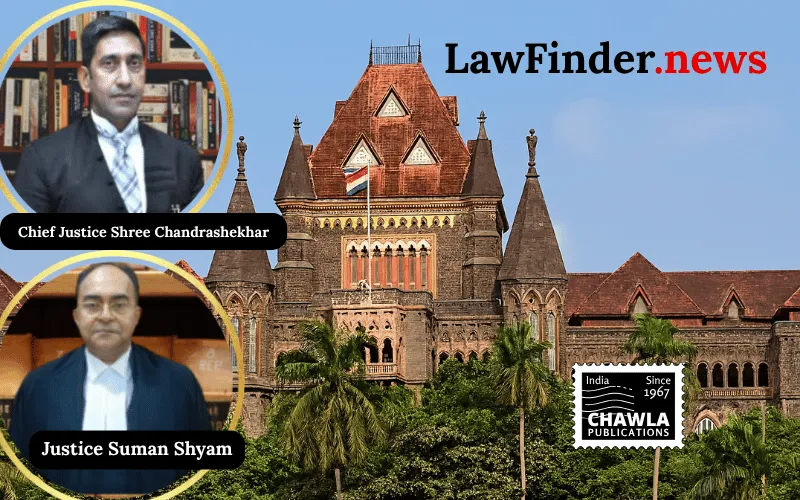
In a significant ruling, the Bombay High Court has set aside charges against the appellants in the 2006 Malegaon bomb blast case, citing lack of sufficient admissible evidence to proceed with the trial. The court's judgment, delivered by a division bench comprising Chief Justice Shree Chandrashekhar and Justice Shyam C. Chandak, highlighted the inadequacy of evidence collected by the National Investigation Agency (NIA), including retracted confessional statements and hearsay evidence, which were deemed inadmissible.
The case pertains to a series of bomb blasts that occurred on September 8, 2006, at Malegaon in Nashik district, resulting in the deaths of 31 individuals and injuries to 312 others. The accused, Rajendra Chaudhary and others, were charged with various offenses under the Indian Penal Code, the Explosive Substances Act, and the Unlawful Activities (Prevention) Act, based on investigations conducted by the NIA after taking over from the Maharashtra Police and the Anti-Terrorism Squad.
In its detailed judgment, the court observed that the Special Judge had failed to apply judicial mind in framing charges against the accused, relying instead on inadmissible evidence such as retracted confessions and delayed test identification parades. The court reiterated the principle that confessions made to police officers or while in police custody are inadmissible unless made in the immediate presence of a Magistrate. The court also noted that the identification parade conducted years after the incident lacked probative value.
The bench emphasized that further investigation under Section 173(8) of the Criminal Procedure Code cannot involve fresh or de-novo investigation, as was impermissibly conducted by the NIA. It criticized the NIA for relying on retracted statements and hearsay evidence, stating that these materials were insufficient to establish a prima facie case against the accused.
The court's decision to discharge the appellants underscores the need for rigorous adherence to evidentiary standards in criminal proceedings, especially in cases involving serious charges such as terrorism. The ruling also highlights the importance of timely and proper conduct of investigative procedures, such as test identification parades, to ensure their admissibility and reliability.
The appellants, now discharged from all charges, expressed relief at the judgment, while the decision is likely to have broader implications for the handling of evidence and investigations in similar high-profile cases.
Bottom Line:
Allegations of involvement in terrorist acts must be supported by admissible evidence. Retraction of confessional statements and reliance on hearsay evidence cannot justify the framing of charges against accused persons.
Statutory provision(s): National Investigation Agency Act, 2008 Section 21; Indian Penal Code, 1860 Sections 302, 307, 120B; Code of Criminal Procedure, 1973 Sections 227, 228; Indian Evidence Act, 1872 Sections 25, 26, 27; Unlawful Activities (Prevention) Act, 1967 Sections 15, 16, 18; Explosive Act, 1884 Sections 6A, 9B; Explosive Substances Act, 1908 Sections 3, 4, 5, 6
Rajendra Chaudhary v. Union of India, (Bombay)(DB) : Law Finder Doc id # 2887136