Court Finds Lack of Evidence and Procedural Lapses in Enquiry Against Former Assistant Manager
In a significant judgment, the Nagpur Bench of the Bombay High Court quashed the dismissal of a former Assistant Manager, Ravidas, who was embroiled in a bribery case. The Court found that the departmental enquiry conducted by the Indian Oil Corporation was marred by procedural irregularities and lacked sufficient evidence to substantiate the charges of illegal gratification.
The petitioner, Ravidas, had been dismissed from service following an enquiry that alleged he had accepted a bribe of Rs. 15,000. The allegations surfaced after a complaint was lodged by a contractor, leading to a CBI trap wherein Ravidas was purportedly caught red-handed. However, the Court observed that the enquiry failed to adhere to the principles of natural justice and fair play.
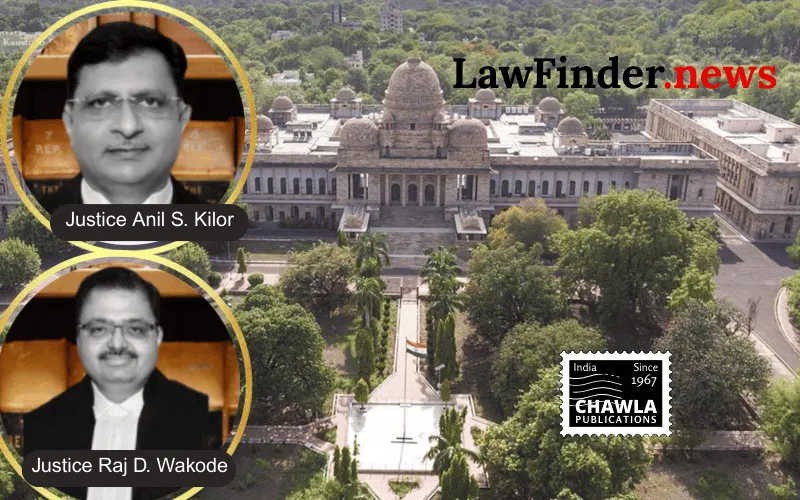
The division bench, comprising Justices Anil S. Kilor and Raj D. Wakode, scrutinized the enquiry process and concluded that the findings were based on unproven documents and unsupported oral evidence. The Court highlighted that none of the witnesses, including the complainant and panch witnesses, could definitively establish that Ravidas had demanded or accepted the bribe. Furthermore, the Court pointed out the disparity in the punishment meted out, as another accused in the same case received a lesser penalty.
Citing precedents from the Supreme Court, the judgment emphasized the quasi-judicial nature of departmental proceedings, underscoring that evidence must be legally admissible and witnesses should substantiate the documents relied upon. The Court reiterated that suspicion cannot replace concrete legal proof.
As a result, the High Court set aside the orders of dismissal and the enquiry report, restoring Ravidas's entitlements and benefits. This decision underscores the judiciary's commitment to ensuring fairness and transparency in disciplinary proceedings within public enterprises.
Bottom Line:
In a departmental enquiry, the demand and acceptance of illegal gratification must be proved with cogent evidence. Documents relied upon in the enquiry must be duly proved by witnesses having knowledge of their contents, and oral evidence must establish the allegations. Suspicion or surmises cannot substitute legal proof.
Statutory provision(s):
Conduct, Discipline and Appeal Rules, 1980 Rule 6(1)(a), (b), (c), Rule 7(2), 7(5), 7(30)
Ravidas v. Union of India, (Bombay)(DB)(Nagpur Bench) : Law Finder Doc id # 2864044