Court Rules that Graphology Lacks Scientific Validation; Emphasizes Need for Adherence to Procedural and Evidentiary Standards
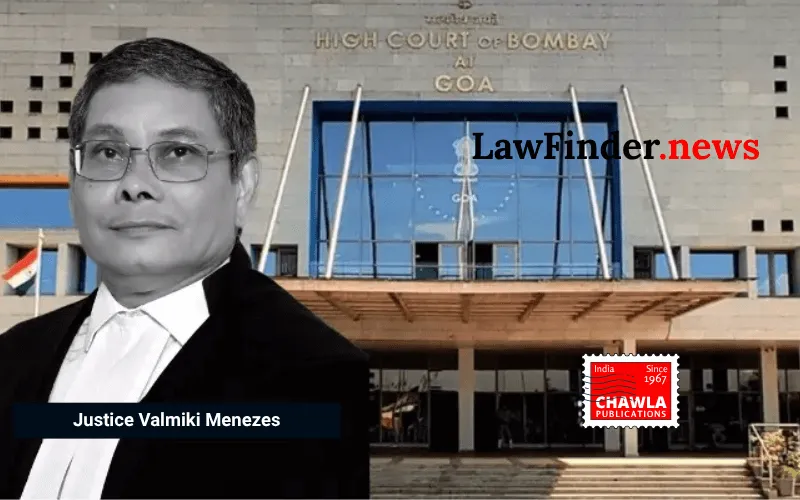
In a significant ruling, the Bombay High Court, Goa Bench, quashed an order by the Civil Judge Junior Division, B Court, Bicholim, allowing the production of a Graphologist's report in a will dispute case. The decision, delivered by Justice Valmiki Menezes, emphasized the lack of scientific acceptance of graphology and underscored the necessity of adhering to procedural and evidentiary standards.
The case involves a challenge to a will allegedly executed by the late Mrs. Ruby Patrick Almeida in favor of Mr. Vincent Philip D'Costa, the petitioner. The respondents, children of Ruby’s sister Stella, claimed the will was invalid due to Ruby's compromised mental state and alleged coercion by D'Costa. The dispute has been ongoing since 2009.
The trial court had previously permitted the introduction of a Graphologist's report during the final arguments stage, despite objections from the defendant. The report, authored by Mr. Milind Rajore, purportedly analyzed Ruby's handwriting to assess her mental state at the time of the will's execution. However, the High Court found that the report did not meet the necessary standards of scientific evidence as required under Section 39(1) of the Bharatiya Sakshya Adhiniyam, 2023, which corresponds to Section 45 of the Indian Evidence Act.
Justice Menezes criticized the trial court for allowing the report without establishing its scientific basis or relevance, stating that graphology is considered a pseudoscience and lacks the necessary credibility to influence judicial decisions. The High Court stressed that expert evidence, especially when introduced late in proceedings, must be accompanied by a valid justification for its delay and scientific validity, neither of which were present in this case.
The ruling also highlighted procedural lapses, noting that the application to introduce the report failed to comply with the requirements of the Civil Procedure Code, specifically Order 13, Rule 1, and Order 7, Rule 14. These rules mandate that all relevant documents should be presented at the earliest possible stage unless a compelling reason for delay is provided.
In addition to the procedural issues, the High Court pointed out that the report's conclusions were based on photocopies rather than original documents, further undermining its reliability. The judgment reaffirmed the principle that expert opinions, particularly those of handwriting experts, are of a corroborative nature and should be substantiated by direct or circumstantial evidence.
The decision underscores the judiciary's role in ensuring that only credible, scientifically validated evidence is considered in judicial proceedings. The High Court's ruling effectively sets aside the trial court's order, barring the Graphologist's report from being introduced in the ongoing will dispute.
Bottom Line:
Application for production of expert evidence based on Graphology not justified without demonstrating its scientific acceptance or relevance under Section 39(1) of Bharatiya Sakshya Adhiniyam, 2023 corresponding to Section 45 of the Indian Evidence Act.
Statutory provision(s):
Bharatiya Sakshya Adhiniyam, 2023 Section 39(1), Civil Procedure Code, 1908 Order 13, Rule 1, Civil Procedure Code, 1908 Order 7, Rule 14, Indian Evidence Act, 1872 Section 45, Indian Evidence Act, 1872 Section 47, Article 227 of Constitution of India