Court finds arbitrator ignored crucial evidence of RCF’s commercial use of GTGs prior to Preliminary Acceptance Certificate; rejects claim of Rs.173.72 Crores as damages and holds liquidated damages levy unlawful
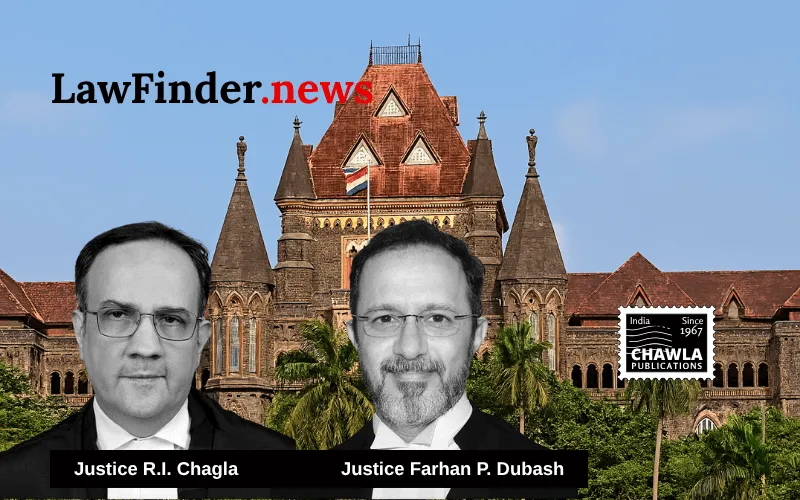
In a significant judgment dated December 9, 2025, the Bombay High Court, presided over by Justice R.I. Chagla, allowed the Commercial Arbitration Petition filed by Thermax Limited challenging an arbitral award in dispute with Rashtriya Chemicals & Fertilizers Limited (RCF). The Court set aside the award dated June 5, 2023, primarily on grounds of perversity, ignoring vital evidence, and lack of adequate reasons, and directed RCF to refund over Rs. 218 crore deposited by Thermax along with interest.
The dispute arose from a contract between Thermax and RCF involving setting up two 25 MW Gas Turbine Generators (GTGs) and associated equipment at RCF's Thal plant. The contract included clauses stipulating that RCF would only operate the plant after successful completion of Performance Guarantee Tests (PG Tests) and issuance of a Preliminary Acceptance Certificate (PAC). However, RCF began commercial use of the GTGs as early as March-April 2018, nearly a year before issuing the PAC in March 2019.
Thermax contended that the breakdown of the GTGs in March 2019 resulted from RCF’s failure to comply with the operation and maintenance manual, including ignoring 269 and 52 air intake filter alarms for the two GTGs, respectively. Siemens, the original equipment manufacturer, had also recommended urgent shutdown and compressor washing, which RCF delayed. Thermax argued that RCF’s premature commercial use and negligent handling caused the breakdown, not any inherent defect in the GTGs.
RCF alleged defects in the GTGs, relying initially on a “Shakti Report” alleging damage due to “rubbing theory,” which they later abandoned. The arbitral award accepted RCF’s claim and awarded damages of Rs. 173.72 crores for additional power expenditure during GTG downtime, characterizing it as direct loss, and also upheld RCF's levy of Mutually Agreed Damages (MAD) for project delay.
The Bombay High Court’s detailed analysis found serious flaws in the arbitral tribunal’s reasoning:
1. Ignoring Evidence of Premature Commercial Use: The tribunal disregarded ample evidence and documents demonstrating RCF’s full control and commercial use of the GTGs nearly a year before PAC issuance, including operating hours, power generated, RCF’s own emails, and annual reports claiming depreciation on GTGs. The Court held that contractual clauses on PAC and “Taking Over” were rendered otiose by RCF’s conduct and cannot be used to hold Thermax liable for breakdowns during RCF’s control period.
2. Faulty Attribution of Breakdown to Thermax: The Court noted that the Final Root Cause Analysis by Siemens indicated that dirt accumulation on compressor blades due to RCF’s failure to timely replace filters (despite multiple alarms) was the cause of breakdown. The arbitrator wrongly relied on the erroneous “compressor malfunction alarm” configuration to absolve RCF of responsibility for maintenance. The Court held that RCF’s failure to act on filter alarms constituted faulty handling, not a defect attributable to Thermax.
3. Award of Rs. 173.72 Crores Damages Illegal and Unproven: The Court found that the damages claimed were consequential loss barred under Clause 32.2(a) of the contract, which excluded liability for indirect or consequential loss. Further, the evidence to prove these damages was insufficient and uncorroborated, relying on unproduced Chartered Accountant certificates and unauthenticated SAP ERP data. The arbitrator’s acceptance of RCF’s witness evidence without adequate proof was held perverse.
4. Illegal Levy of Liquidated Damages (MAD): The arbitrator upheld RCF’s deduction of MAD for delay in project completion, ignoring the fact that RCF itself delayed provision of the main steam line, a critical prerequisite. The Court held that RCF cannot benefit from its own breach and that actual loss must be proved before liquidated damages can be imposed, which was absent here.
5. Failure to Provide Adequate Reasons: The arbitral award was found to lack intelligible and adequate reasons in several respects, including ignoring Thermax’s submissions and evidence. The Court applied the Supreme Court’s three-category test from OPG Power Generation case (2025) and found the award fell within all categories warranting setting aside.
The Court therefore set aside the arbitral award, allowed Thermax’s petition, and ordered RCF to refund the entire Rs. 218.45 crore deposited with interest within ten days. The Court declined costs and disposed of the petition accordingly.
This landmark judgment underscores the importance of adherence to contract terms in commercial arbitration, the need for arbitral tribunals to consider all material evidence and provide reasoned awards, and the limits on damages recoverable under contract law principles. It sends a strong message on the illegality of enforcing exclusion clauses and the requirement of proof for damages claims, especially consequential losses.
Bottom Line:
Arbitral Award set aside for ignoring material evidence that Respondent had taken commercial control of the plant prior to issuance of Preliminary Acceptance Certificate (PAC), failure to consider contractual and evidentiary submissions regarding defect liability, and erroneous grant of consequential damages contrary to exclusion clause in contract.
Statutory provision(s): Section 34 of the Arbitration and Conciliation Act, 1996, Section 73 of the Indian Contract Act, 1872
Thermax Limited v. Rashtriya Chemicals & Fertilizers Ltd., (Bombay) : Law Finder Doc Id # 2819798