The Court finds the arbitrator's ex-parte award patently illegal, upholding principles of natural justice and evidence substantiation.
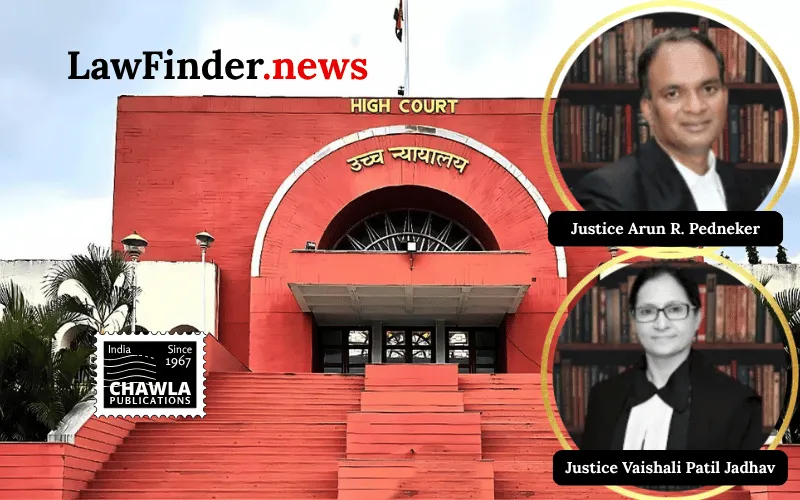
In a significant ruling, the Bombay High Court has set aside an ex-parte arbitral award in the case of M/s. Shinde & Sons v. Godawari Marathwada Irrigation Development Corporation. The Division Bench at Aurangabad, comprising Justices Arun R. Pedneker and Vaishali Patil-Jadhav, found the arbitral award to be patently illegal, lacking in evidence, and in violation of natural justice principles.
The dispute arose from a construction contract awarded in the early 1990s for canal work, which faced delays and contractual breaches. After multiple extensions and unfinished work, Shinde & Sons initiated arbitration due to unresolved claims against Godawari Marathwada Irrigation Development Corporation (GMIDC). However, the appointment of Mr. B.B. Jadhav as the sole arbitrator was contested by GMIDC, leading to legal challenges.
Despite pending challenges to his appointment, Mr. Jadhav proceeded with arbitration ex-parte, culminating in an award of over Rs. 1 billion to Shinde & Sons, with 18% annual interest. The award was passed without the participation of GMIDC, who had raised objections regarding the arbitrator's appointment and the lack of evidence supporting the claims.
The District Court, in a prior judgment, had already set aside the award, prompting Shinde & Sons to appeal under Section 37 of the Arbitration and Conciliation Act, 1996. The High Court upheld the District Court's decision, emphasizing that the arbitrator failed to substantiate claims with proper evidence and neglected to await the resolution of the appointment challenge.
The Court highlighted the procedural impropriety and bias in the arbitrator's conduct, noting that the award ignored vital evidence and was based on assumptions. Furthermore, the arbitrator's actions were deemed to shock the conscience of the court, rendering the award unsustainable.
The decision reinforces the need for adherence to arbitration protocols, particularly when an ex-parte award is involved. It underscores the judiciary's role in ensuring that arbitral proceedings are conducted fairly, with due regard to evidence and natural justice.
In conclusion, the Bombay High Court's ruling underscores the judiciary's vigilance in maintaining the integrity of arbitration proceedings. The Court has left the door open for the parties to agree upon a new arbitrator or seek court intervention for appointment, keeping all legal avenues available for a fair resolution of the dispute.
Bottom Line:
Arbitration proceedings must adhere to principles of natural justice, and arbitral awards must be supported by evidence. Ex-parte awards, passed in undue haste without proper substantiation of claims, are liable to be set aside under Section 34 of the Arbitration and Conciliation Act, 1996.
Statutory provision(s): Arbitration and Conciliation Act, 1996 Sections 11, 13, 25, 34, 37