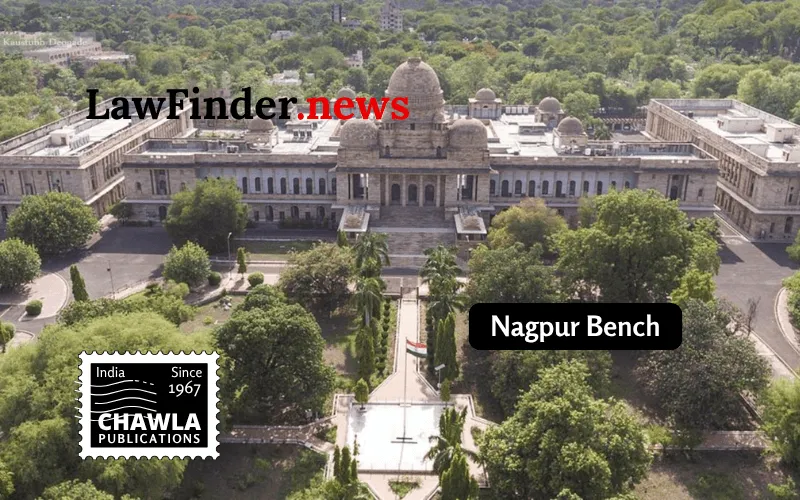
Court emphasizes protection of citizens' fundamental rights during celebrations, invoking Dr. Ambedkar's principles.
In a landmark judgment on April 28, 2026, the Bombay High Court's Nagpur Bench, presided over by Justices Urmila Joshi-Phalke and Nivedita P. Mehta, addressed the pressing issue of noise pollution during public celebrations. The case, initiated through Public Interest Litigations and a Suo Motu action, was centered around the celebrations of Dr. Babasaheb Ambedkar's birth anniversary at "Samvidhan Square."
The court was apprised by Amicus Curiae Mr. Abdul Subhan about the disturbances caused by loud noises, slogans, and firecrackers during the event, which allegedly violated the Noise Pollution (Regulation and Control) Rules, 2000, as well as the fundamental rights guaranteed under Article 21 of the Indian Constitution. This article encompasses the right to life, dignity, and health, emphasizing the need for peace and comfort within one's home.
The judgment highlighted Dr. Ambedkar's vision for social democracy, which advocates for individual progress without compromising others' dignity. The court underscored the importance of celebrating the legacy of national heroes through intellectual growth and social reforms, rather than through disruptive festivities that could harm public health and disturb environmental standards.
The High Court posed critical questions to the event organizers, urging them to ensure that celebrations align with Dr. Ambedkar's principles of liberty, equality, and fraternity. The judgment explicitly stated that nighttime disturbances between 10:00 pm and 6:00 am violate noise pollution regulations and infringe upon individuals' rights to sleep and health. The court also expressed concern for the impact on wildlife, noting how birds are often affected by untimely noises.
In response to these concerns, the court issued notices to the event organizers, demanding explanations on their adherence to Dr. Ambedkar's principles during the celebrations. Additionally, the Commissioner of Police, Nagpur, was called upon to explain the measures taken to safeguard public rights under Article 21. The case has been scheduled for further proceedings on June 9, 2026.
This judgment serves as a reminder of the judiciary's role in balancing cultural expressions with environmental and public health standards, reinforcing the fundamental rights enshrined in the Constitution.
Bottom line:-
Noise pollution caused by celebrations must not violate the fundamental rights of citizens under Article 21 of the Constitution of India, which includes the right to life, dignity, and health, and must also adhere to The Noise Pollution (Regulation and Control) Rules, 2000.
Statutory provision(s): Article 21, Article 19, Article 25 of the Constitution of India, Noise Pollution (Regulation and Control) Rules, 2000.