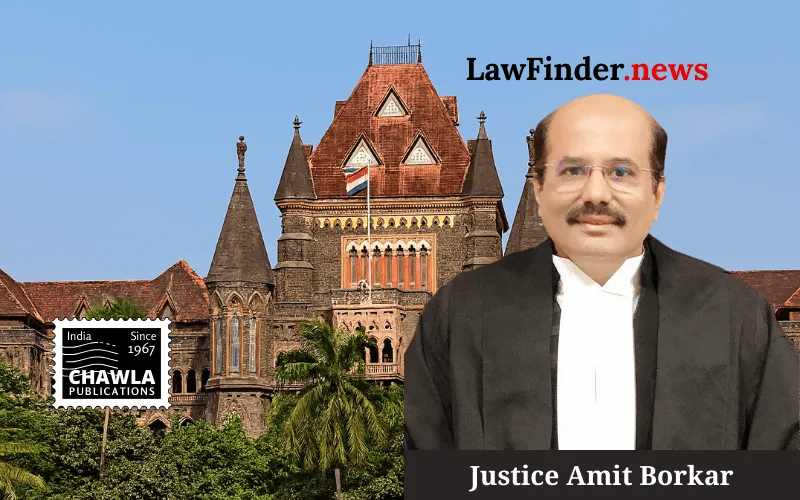
Court dismisses challenge, affirms administrative role of cooperative societies in membership recognition without adjudicating ownership disputes.
In a significant ruling, the Bombay High Court, under the bench of Justice Amit Borkar, dismissed a writ petition challenging the decision of the Divisional Joint Registrar regarding membership recognition in the Malad Cooperative Housing Society. The case centered around Flat No. 31 of Building No. 4, originally held by late Shri Ramlal Dhanuka and his wife, Pannadevi. Following their demise, the question arose as to the rightful membership recognition among their legal heirs.
Respondent No. 4, Radheshyam Dhanuka, one of the legal heirs, sought membership in the society, which was initially rejected by the petitioner society on the grounds of incomplete title documentation. The society's role, as clarified by the court, is not to determine ownership but to manage administrative functions and recognize members based on prima facie evidence.
The court reaffirmed that cooperative societies are not courts of law and should not engage in title adjudication. Instead, they are tasked with recognizing members for administrative purposes, relying on prima facie satisfaction rather than conclusive ownership determinations. This decision aligns with the statutory provisions under the Maharashtra Cooperative Societies Act, 1960, particularly Section 30, which guides the transfer of interest upon the death of a member.
Justice Borkar emphasized that the society's function is to identify a member for administrative purposes, not to adjudicate complex succession claims, which should be resolved through appropriate legal channels. The court further noted that the application defects or incorrect nomenclature should not override substantive claims, and the withdrawal of title-related litigation by heirs removed any existing cloud over membership claims.
The court also addressed jurisdictional issues, affirming the revisional powers of the Divisional Joint Registrar even in cases involving delegated authority under the Maharashtra Cooperative Societies Act. The judgment drew on Supreme Court precedents, including the landmark cases of Chintapalli and Yogendra Prasad, underscoring that delegation of powers does not eliminate the supervisory control of the Registrar.
In conclusion, the court found no merit in the petitioners' arguments and upheld the decision of the Divisional Joint Registrar, allowing Radheshyam Dhanuka's membership claim. The ruling clarifies the administrative boundaries of cooperative societies in membership recognition and the importance of adhering to statutory frameworks.
Bottom Line:
Membership recognition in cooperative societies is an administrative function and not a title adjudication. Societies are not empowered to decide ownership disputes or succession claims among legal heirs.
Statutory provision(s): Maharashtra Cooperative Societies Act, 1960, Sections 3, 30(1), 154, 158; Articles 226 and 227 of the Constitution of India.