Court Finds Procedural Impropriety and Absence of Natural Justice in Retirement Decision
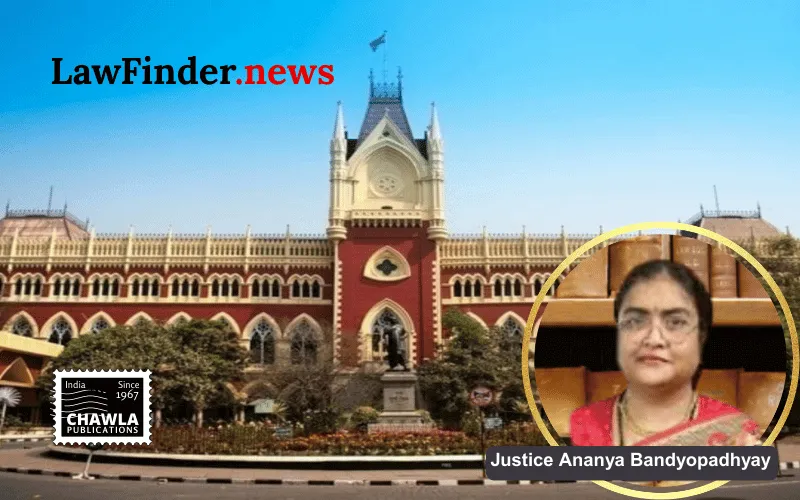
In a significant judgment, the Calcutta High Court has set aside the premature retirement order of Md. Shams Biswas, a Senior Manager at the United Bank of India (now Punjab National Bank), citing procedural impropriety and violation of principles of natural justice. The judgment was delivered by Justice Ananya Bandyopadhyay on May 5, 2026, following a writ petition filed by Mr. Biswas challenging his premature retirement under Regulation 19(1) of the United Bank of India (Officers') Service Regulations, 1979.
The petitioner, Md. Shams Biswas, alleged that his retirement was unjustified, arbitrary, and driven by discriminatory motives, including caste and religious bias. He contended that the decision was made without providing him access to crucial documents like the medical report and the recommendations of the Special Committee, which formed the basis of the retirement decision. The court found that the non-disclosure of these materials violated the principles of natural justice, making the decision procedurally unfair.
Justice Bandyopadhyay emphasized that the competent authority failed to demonstrate independent application of mind and merely endorsed the recommendations of the Special Committee without any analytical reasoning. The court noted that the decision was implemented with undue haste, with Mr. Biswas being retired on March 22, 2016, rather than the normative last day of the month, without justification. This deviation further rendered the process suspect and arbitrary.
The judgment highlighted the absence of any disciplinary proceedings against Mr. Biswas, despite allegations of misconduct. It underscored that the power under Regulation 19(1) should not be used as a substitute for disciplinary actions and should only be invoked based on discernible criteria such as inefficiency or incapacity. The court stressed that administrative discretion must operate within the confines of legality, fairness, and transparency, and must not be influenced by considerations of caste or religion.
Justice Bandyopadhyay ordered the matter to be reconsidered by the competent authority, directing the bank to furnish all relevant materials to Mr. Biswas and provide him a reasonable opportunity for representation. The court mandated that a reasoned and speaking order be passed thereafter, ensuring that the decision is free from any discriminatory influences as per Articles 14, 15, and 25 of the Constitution of India.
This decision reaffirms the principle that administrative actions must adhere to constitutional morality and procedural fairness, regardless of the administrative merger of banks. The case serves as a crucial reminder that the autonomy of administrative discretion must be balanced with the inviolable discipline of law.
Bottom line:-
Premature retirement of an officer under Regulation 19(1) of the United Bank of India (Officers') Service Regulations, 1979, must adhere to principles of natural justice, procedural fairness, and reasoned decision-making. Arbitrariness, non-disclosure of material, and reliance on extraneous considerations vitiate such administrative actions.
Statutory provision(s): Regulation 19(1) of the United Bank of India (Officers') Service Regulations, 1979, Articles 14, 15, and 25 of the Constitution of India.