Court affirms long-standing benefits, citing procedural impropriety and equity in Ashok Tripathy case against Union of India.
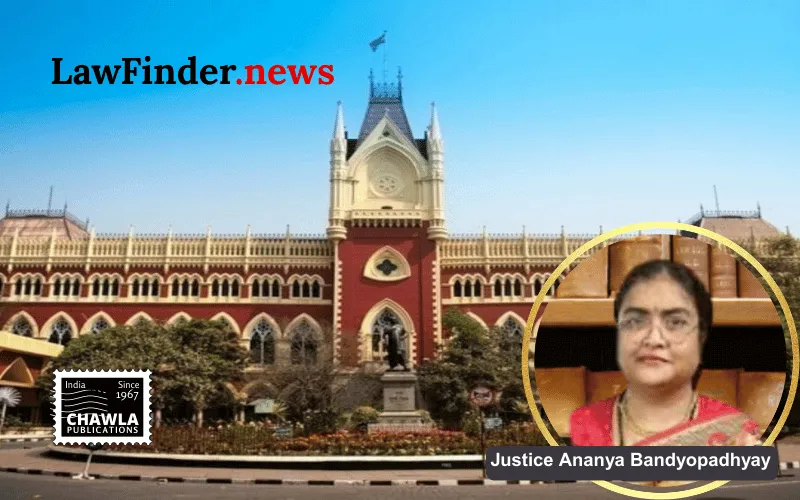
The Calcutta High Court has ruled in favor of petitioner Ashok Tripathy, quashing the show-cause notice and subsequent office order issued by the Union of India for recovering alleged excess payments made over several decades. Justice Ananya Bandyopadhyay delivered the judgment, emphasizing the impermissibility of retrospective recovery in the absence of employee misrepresentation and highlighting prolonged administrative inaction.
The petitioner, a retired Hindi translator, had been granted financial upgradations and benefits that were consistently acted upon for nearly two decades. The respondents issued a show-cause notice in 2017, 17 years after an earlier High Court order in 2000 had quashed a similar cancellation attempt, citing an administrative mistake. The Court held that the recovery was arbitrary and inequitable, especially given the prolonged delay and absence of any misrepresentation by the employee.
The judgment referenced several Supreme Court precedents, including State of Punjab v. Rafiq Masih and Thomas Daniel v. State of Kerala, which protect employees from recovery of benefits that have been long acted upon, particularly when the employee is close to retirement or has already retired.
Justice Bandyopadhyay noted that the respondents' attempt to reopen settled issues after decades without any new justification constituted procedural impropriety and lacked substantive fairness. The Court criticized the administrative lethargy and emphasized that the law does not permit the unsettling of vested rights due to bureaucratic inertia.
The judgment mandates that all financial upgradations, pay fixations, and Assured Career Progression (ACP) benefits granted to the petitioner remain affirmed, and no recovery should be initiated. The Court underscored the importance of fairness, promptness, and reasoned action in public administration, warning against retrospective disruption of vested financial positions.
The decision highlights the judiciary's role in safeguarding employees' rights against arbitrary administrative actions, reinforcing the principles of equity and procedural propriety in service law disputes.
Bottom Line:
Recovery of financial benefits granted for decades without employee misrepresentation is impermissible; administrative lethargy cannot justify retrospective disruption of vested rights.
Statutory provision(s):
- Constitution of India, Article 14
- Department of Personnel and Training Office Memorandum dated 6th February, 2014
- Supreme Court judgments in State of Punjab v. Rafiq Masih, Thomas Daniel v. State of Kerala, B.J. Akkara v. Govt. of India, Shyam Babu Verma v. Union of India, Syed Abdul Qadir v. State of Bihar, Sahib Ram v. State of Haryana.
Ashok Tripathy v. Union of India, (Calcutta) : Law Finder Doc id # 2856605