Judgment affirms MSTC CDA Rules over Payment of Gratuity Act for disciplinary actions initiated during service.
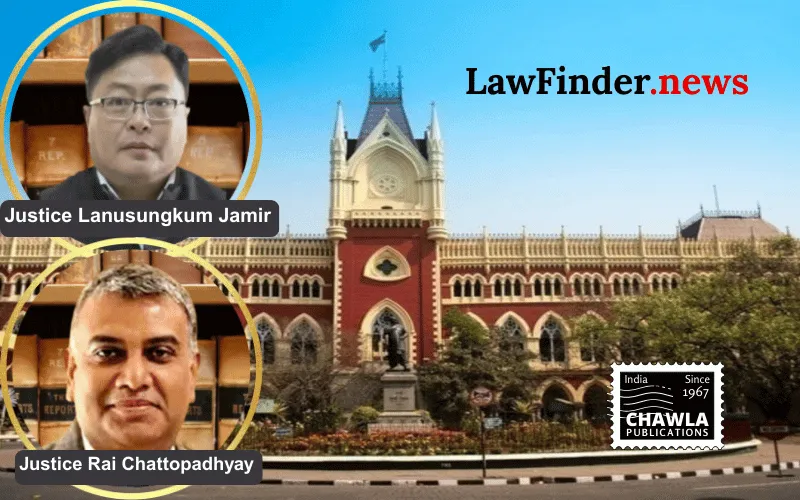
In a significant ruling, the Calcutta High Court has endorsed MSTC Limited's decision to withhold the gratuity of a former Chairman and Managing Director, Malay Sengupta, due to disciplinary proceedings initiated during his tenure. The Division Bench, comprising Justices Lanusungkum Jamir and Rai Chattopadhyay, set aside an earlier judgment by a Single Judge, thereby reinforcing the supremacy of MSTC Conduct, Discipline, and Appeals (CDA) Rules over the Payment of Gratuity Act, 1972, in specific scenarios.
The case revolved around the applicability of the Payment of Gratuity Act, 1972, vis-à-vis MSTC's service rules. The legal conundrum arose when disciplinary proceedings, initiated against Sengupta shortly before his retirement on April 30, 2009, led to the withholding of his gratuity. The MSTC CDA Rules, particularly Rule 30A, permit the continuation of disciplinary actions post-superannuation and allow for the withholding of gratuity if misconduct is proven.
The crux of the judgment lies in the Court's interpretation of Rule 30A, which allows disciplinary proceedings to be deemed as ongoing, even after an employee's retirement, thus enabling penalties such as gratuity forfeiture. This stance aligns with the Supreme Court's decision in the Mahanadi Coalfields Ltd. case, which supports the continuation and conclusion of disciplinary proceedings post-retirement, provided they began while the employee was in service.
The Bench observed that the MSTC CDA Rules are not repugnant to the Payment of Gratuity Act, as they operate in distinct scenarios. While the Gratuity Act outlines conditions under which gratuity can be forfeited, the CDA Rules provide a framework for addressing pecuniary losses caused by an employee's negligence.
The Court further noted that the Single Judge's reliance on the overruled Jaswant Singh Gill case was misplaced, as the Supreme Court's subsequent rulings have clarified the legal position. The judgment emphasized that the disciplinary proceedings and the findings therein should not be scrutinized unless the rules governing such proceedings are challenged and set aside.
Ultimately, the Calcutta High Court's decision underscores the autonomy of service rules in governing post-retirement disciplinary actions, provided they are consistent with statutory provisions. This ruling not only supports MSTC's stance but also sets a precedent for similar cases where disciplinary actions extend beyond an employee's service period.
Bottom Line:
Disciplinary proceedings after superannuation can be continued and penalties, including forfeiture of gratuity, can be imposed as per service rules, provided the disciplinary rules allow such continuation and penalty.
Statutory provision(s): Payment of Gratuity Act, 1972 Section 4(6), MSTC CDA Rules, 1980 Rule 30A
MSTC Limited v. Malay Sengupta, (Calcutta)(DB) : Law Finder Doc Id # 2820293