Court Affirms Tribunal's Judgment, Dismissing Petitions Due to Lack of Locus Standi in Representation of Deity
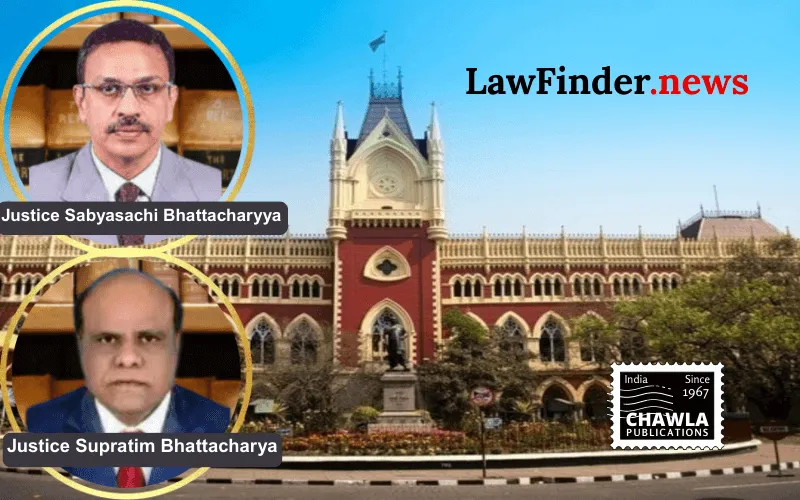
The Calcutta High Court has upheld a decision made by the West Bengal Land Reforms and Tenancy Tribunal concerning a property dispute involving debottar (dedicated deity) land. The judgment, delivered by Justices Sabyasachi Bhattacharyya and Supratim Bhattacharya, dismissed two petitions filed by Kalyan Das, who claimed to represent the deity Sri Sri Dodhimohan Jew as a sebait (caretaker).
The petitions challenged the Tribunal's ruling that dismissed Das's application due to his lack of locus standi, asserting that he had no legitimate connection with the deity. The Court emphasized that according to Hindu law, the sebait alone is competent to institute a suit in the name of the deity, unless exceptional circumstances deprive the sebait of such power. In such cases, a third party may act as the next friend of the deity, but only if appointed by the court.
The case arose from two original applications: one by the petitioners seeking to record themselves as Raiyat (tenant) of the disputed plots, and another by private respondents seeking a declaration of their ownership and protection of their possession. The Tribunal dismissed the petitioners' application due to lack of locus standi, while granting limited relief to the private respondents, affirming that the property had not vested in the state.
The High Court found that Das's claim to represent the deity was unsupported by any court appointment or legal recognition. Furthermore, the property in question was identified as private debottar property rather than public, restricting rights and claims by the general public or individuals like Das.
In its judgment, the High Court affirmed the Tribunal's jurisdiction to assess the maintainability of representations at a prima facie level, thereby avoiding unnecessary litigation. The Court held that the Tribunal acted within its rights in determining the lack of locus standi of the petitioner and preventing futile legal exercises.
The ruling reinforces the legal principle that matters concerning the title and authenticity of debottar properties are best addressed by competent civil courts rather than writ courts or Tribunals operating under limited jurisdiction.
Bottom Line:
Hindu Law - Sebait represents the deity and is alone competent to institute a suit in the name of the deity. In exceptional circumstances, where the sebait deprives himself of the power to represent the deity, a third party can act as next friend of the deity, but such appointment must be made by the court.
Statutory provision(s): Hindu Law, West Bengal Land Reforms and Tenancy Tribunal Act
Sri Sri Dodhimohan Jew v. State of West Bengal, (Calcutta)(DB) : Law Finder Doc id # 2842807