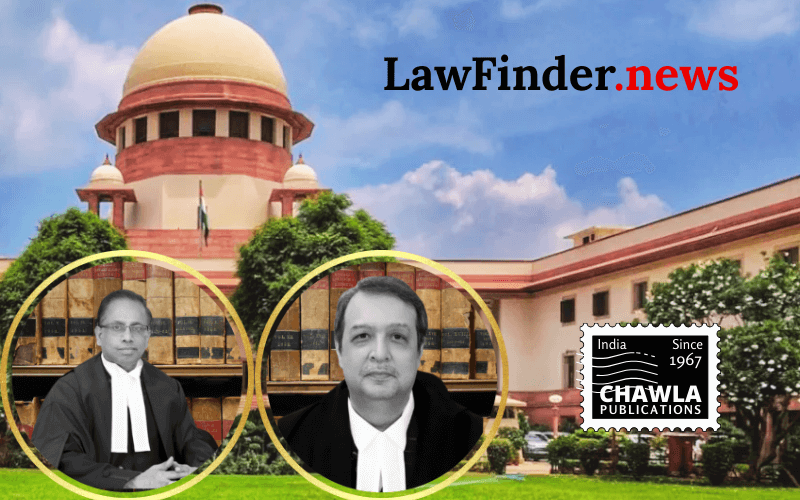
New Delhi, Dec 18 The Supreme Court expressed its desire on Thursday to meet the parents of a 31-year-old man, lying in a comatose condition for more than 12 years, while considering his father's plea for passive euthanasia by withdrawing artificial life support.
The man suffered head injuries after falling from the fourth floor of a building in 2013. He is on an artificial support system for more than 12 years now.
Passive euthanasia is the intentional act of letting a patient die by withholding or withdrawing life support or the treatment necessary to keep him alive.
A bench of Justices J B Pardiwala and K V Viswanathan perused a report containing Harish Rana's medical history filed by a secondary medical board of doctors from the All India Institute of Medical Sciences (AIIMS) here and remarked that it is a "sad" report.
"It is a very sad report. We cannot keep this boy in this stage," the bench observed while scheduling a meeting with Rana's parents at 3 pm on January 13.
The court was hearing a plea filed by Ashok Rana, seeking judicial intervention to withdraw life support for his son.
The primary medical board, after examining the patient's condition, had stressed the negligible chance of his recovery.
The top court had, on December 11, noted that according to the report of the primary medical board, the man is in a pathetic condition.
"He was found to be lying on a bed with treacheostomy tube for respiration and gastrostomy for feeding. The photographs attached with the letter would indicate that he has suffered huge bed sores. The team of doctors is of the opinion that the chance of his recovery from the present state is negligible. Harish appears to be in this vegetative condition for the past 13 years," the court had noted.
According to guidelines issued by the apex court in 2023, a primary and a secondary medical board will have to be formed for an expert opinion on the withdrawal of artificial life support for a patient in a vegetative state.
Representing the patient's father in the court, advocate Rashmi Nandakumar said on December 11 that according to a 2018 judgement of the apex court, the next step is to be followed by referring the case to a secondary board formed by the chief medical officer (CMO).
The court recorded the findings of the primary board and said for evaluating the patient's condition, the CMO was accompanied by four medical experts, who examined him and wrote a letter to the principal of the LLRM Medical College in Meerut, Uttar Pradesh.
"In such circumstances, we should now proceed to the next step in the process. We should now order that a secondary medical board be constituted for the purpose of the examination of the patient. We request the AIIMS to constitute the secondary board and give us a report by next Wednesday," the bench said, while directing that the letter of excerpts and other documents shall be forwarded to the AIIMS director at the earliest.
On November 26, the top court asked the district hospital in Sector 39, Noida to constitute a primary board to explore the option of passive euthanasia for Rana, saying his health condition has gone from bad to worse.
It had asked the district hospital to file its report within two weeks on an application filed by Rana's father, seeking passive euthanasia for his son.
"We want the primary board to give us a report that the life-sustaining treatment can be withheld. Let the primary board place its report at the earliest and once it is before us, we shall proceed to pass further orders. Let this exercise be done within two weeks," the bench had directed.
This is the second time in as many years that the petitioners have approached the top court seeking passive euthanasia for their son.
On November 8 last year, the court took note of the Union health ministry's report, suggesting that the patient be put in home care with assistance from the Uttar Pradesh government and regular visits by doctors and a physiotherapist.
The court has said that if home care is not feasible, the patient should be shifted to the district hospital in Noida for ensuring the availability of proper medical care.
Describing the case as a "very hard one", the apex court sought the Centre's response on August 20 last year on the plea of the parents of Rana, who was a student of the Punjab University and had suffered head injuries after falling from the fourth floor of his paying-guest accommodation in 2013.
He has been completely bed-ridden and on an artificial support system for more than 12 years now.
The Supreme Court had agreed with the findings of the Delhi High Court, which had refused to constitute a medical board to consider the parents' plea that their son be allowed to undergo passive euthanasia.
The top court had said Rana was not on a ventilator or on other mechanical support to sustain life and rather, was being fed through a food pipe and hence, no case was made out for passive euthanasia.
The court was, however, considerate of the fact that he has been in a vegetative state for more than a decade and his old parents are finding it difficult to sustain the life through treatment as they have even sold their house.
In July last year, the Delhi High Court refused to refer Rana's case to a medical board for allowing him to undergo passive euthanasia.
The high court had said the facts of the case indicate that the man is not being kept alive mechanically and he is able to sustain himself without any extra external aid.



