South Eastern Coalfields Ltd. directed to pay Rs.5 lakh in lieu of employment claims after prolonged litigation
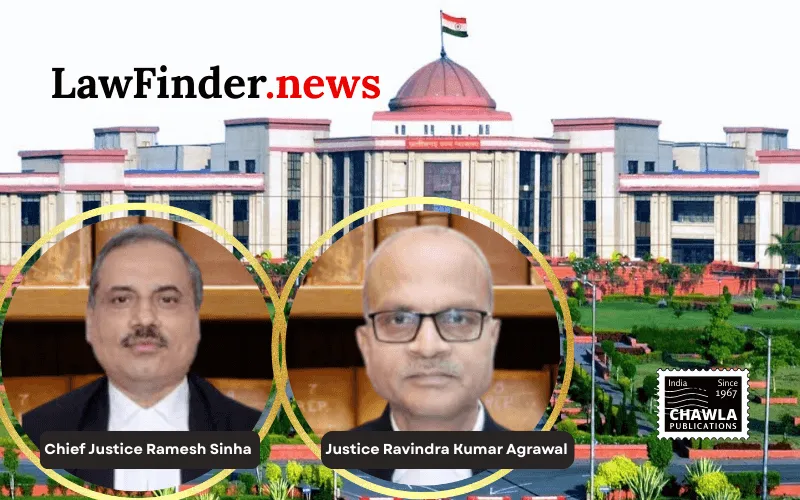
In a significant judgment, the Chhattisgarh High Court has modified the compensation awarded to Mahendra Kumar Sahu, a landowner affected by the acquisition of his land by South Eastern Coalfields Ltd. (SECL). The Division Bench consisting of Chief Justice Ramesh Sinha and Justice Ravindra Kumar Agrawal reduced the compensation from Rs.10 lakh to Rs.5 lakh, resolving a long-standing dispute over employment entitlements under the Rehabilitation Policy, 1991.
The case revolves around the acquisition of Sahu’s land measuring 1.21 acres in Village Govindpur. The land was acquired by SECL for mining purposes, with the surface rights taken over, and compensation of Rs.31,291 paid in 2002. Sahu had sought employment under the Rehabilitation Policy, claiming his entitlement as a land oustee. However, his application was rejected based on an internal decision restricting employment to landowners before the cutoff date of 30.09.1991, a decision that was not communicated to affected parties.
The High Court ruled that such internal decisions, which were neither published nor communicated, could not be used to deny substantive rights. The court emphasized transparency in administrative decisions affecting civil rights. Sahu, now a practicing advocate, expressed his willingness to accept compensation in lieu of employment, leading to the court's modification of the Single Judge’s earlier order, which had directed SECL to consider his employment claim.
The court acknowledged the prolonged litigation and Sahu's pragmatic approach in resolving the dispute. While reducing the compensation, the court noted the absence of mala fides or wrongful conduct by SECL, balancing the equities to deliver justice. SECL has been instructed to pay the revised compensation within 30 days, with legal consequences for any delay.
This judgment highlights the importance of transparency and communication in administrative decisions, particularly in cases involving land acquisition and rehabilitation policies. It underscores the judiciary's role in ensuring equitable resolution in disputes involving substantive rights.
Bottom Line:
Rehabilitation Policy - Employment to land oustees - Denial of employment based on internal administrative decisions not communicated or notified to affected persons is arbitrary and unsustainable in law. Monetary compensation can be awarded in lieu of employment under peculiar facts and circumstances.
Statutory provision(s): Rehabilitation Policy, 1991, Article 14 of the Constitution of India, Section 27 of the General Clauses Act, 1897.