The State's levy on railway transit declared ultra vires the Indian Forest Act, 1927, and unconstitutional by the Chhattisgarh High Court.
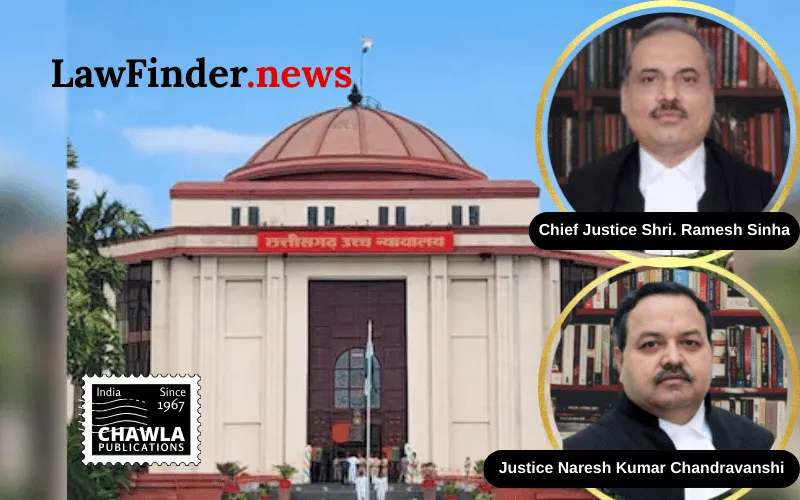
In a landmark decision, the Chhattisgarh High Court has quashed the levy of transit fees imposed by the State Government on the transportation of iron ore by railways. The bench, comprising Chief Justice Shri Ramesh Sinha and Justice Naresh Kumar Chandravanshi, declared the notifications dated June 30, 2015, and July 27, 2022, unconstitutional and beyond the legislative competence of the State, aligning with the provisions of the Indian Forest Act, 1927.
The judgment, arising from the petition filed by Steel Authority of India Limited (SAIL) and others, challenged the validity of Rules 3 and 5 of the Chhattisgarh Transit (Forest Produce) Rules, 2001, under which the State Government levied transit fees on the transportation of iron ore. The Court found that these rules do not contemplate the regulation of railway transit, as Section 41 of the Indian Forest Act, 1927, limits transit regulation to land and water transport, excluding railways.
The Court emphasized that the levy, while termed a "transit fee," essentially partakes the nature of a tax, which is not authorized under the parent statute. The levy on a tonnage basis lacked any quid pro quo, violating Article 265 of the Constitution, which mandates that no tax shall be levied except by the authority of law.
Furthermore, the Court highlighted that the legislative field concerning railway transportation is exclusively reserved for the Union, as per the Constitution of India. By attempting to levy fees on railway transit, the State Government overstepped its constitutional boundaries, infringing upon the domain occupied by Central legislation.
The judgment referenced the Allahabad High Court's decision in Hindalco Industries Limited v. State of U.P., which similarly invalidated transit fees on railway transportation, reinforcing the principle that fiscal statutes must be strictly construed, and that without a proper statutory mechanism for computation and collection, such levies are unsustainable.
The ruling has significant implications for the regulatory landscape surrounding mineral transportation in India, reaffirming the constitutional demarcation of powers between the State and Central Governments. The decision mandates that the State Government refrain from demanding transit fees on iron ore transported by railways, providing relief to the petitioners and potentially setting a precedent for similar cases across the country.
Bottom Line:
State Government cannot levy transit fee on transportation of iron ore by Railways under the Chhattisgarh Transit (Forest Produce) Rules, 2001, as such levy is ultra vires the Indian Forest Act, 1927, and beyond the legislative competence of the State.
Statutory provision(s): Indian Forest Act, 1927 Section 41, Chhattisgarh Transit (Forest Produce) Rules, 2001 Rules 3 and 5, Constitution of India, 1950 Articles 14, 19(1)(g), 245, 246, 265, 301, 304.