Court directs incorporation of beneficial provisions from earlier pension rules to ensure justice for mothers of deceased police personnel.
The Chhattisgarh High Court delivered a landmark judgment on February 11, 2026, in the case of Filisita Lakra v. State of Chhattisgarh, addressing the discriminatory pension provisions affecting the mothers of deceased police personnel. The court ruled in favor of Filisita Lakra, the mother of martyr Ignatius Lakra, by directing the incorporation of beneficial provisions from the Chhattisgarh Civil Services (Extraordinary Pension) Rules, 1963, into the Chhattisgarh Police Karmchari Varg Asadharan Parivar Nirvritti Vetan Niyam, 1965.
The case centered around the denial of family pension to Filisita Lakra after the death of her husband, who had been receiving the pension following the martyrdom of their son in a naxal encounter. The 1965 rules, applicable to police personnel, lacked provisions similar to those in the 1963 rules, which allow the continuation of pension to the mother after the father's demise.
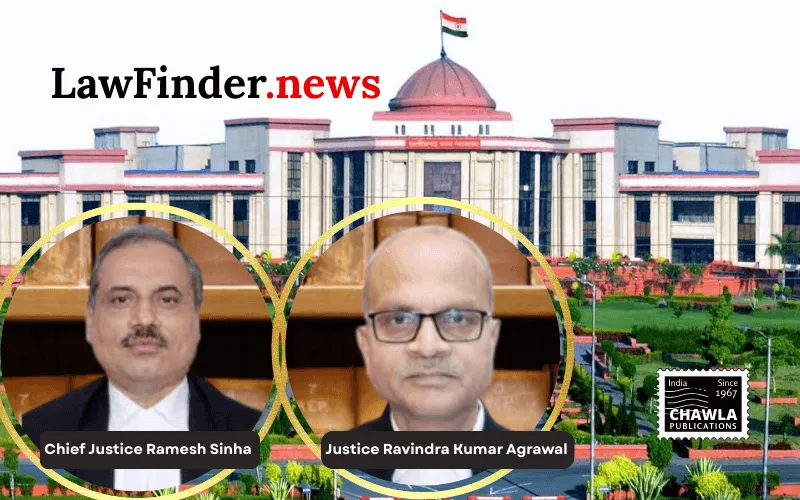
Mr. Ramesh Sinha, C.J., and Mr. Ravindra Kumar Agrawal, J., presiding over the case, emphasized the need for a harmonious construction of the rules to prevent injustice. The court highlighted that the 1965 rules should have incorporated amendments similar to those made in the 1963 rules, ensuring pension continuity for the mother, recognizing the high-risk duties of police personnel in naxal-affected areas.
The court's decision was guided by principles of statutory interpretation, referencing the Supreme Court's judgment in Pandurang Ganpati Chaugule v. Vishwasrao Patil Murgud Sahakari Bank Ltd., which supports the incorporation by reference and harmonious construction of statutes to uphold legislative intent and justice.
The judgment mandates the Chhattisgarh government to treat the beneficial provisions of the 1963 rules as part of the 1965 rules, thereby entitling Filisita Lakra to the family pension. The authorities have been directed to process her pension claim within six weeks, setting a precedent for similar cases.
This decision underscores the judiciary's role in ensuring that laws evolve to address gaps and uphold the rights of those who serve the nation, especially in high-risk roles.
Bottom Line:
Where a later set of rules is framed in compliance with or based upon an earlier statute, and certain beneficial or ancillary provisions are absent in the later enactment, the Court may interpret the later enactment harmoniously with the earlier statute, incorporating beneficial provisions to avoid injustice or arbitrariness.
Statutory provision(s):
Article 226 of the Constitution of India, Chhattisgarh Police Karmchari Varg Asadharan Parivar Nirvritti Vetan Niyam, 1965, Chhattisgarh Civil Services (Extraordinary Pension) Rules, 1963.
Filisita Lakra v. State of Chhattisgarh, (Chhattisgarh)(DB) : Law Finder Doc id # 2853529