Second Appeal Dismissed; Court Affirms Defendants' Right to Recover Possession from Appellant
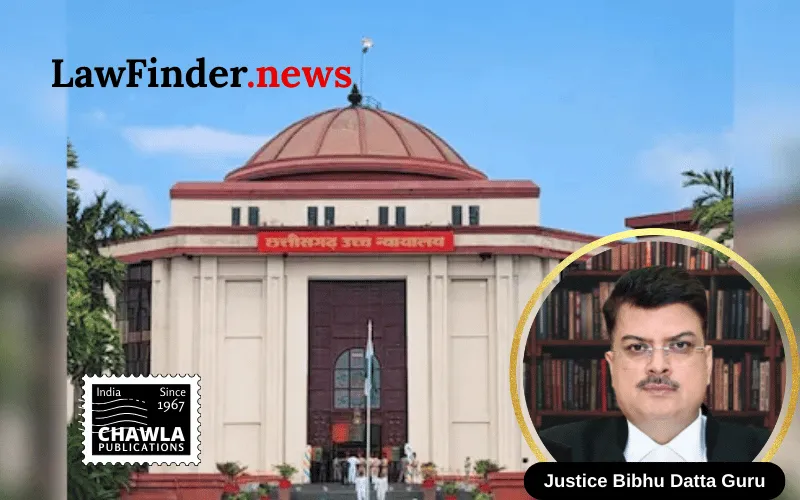
In a significant judgment, the Chhattisgarh High Court, presided over by Justice Bibhu Datta Guru, has dismissed the second appeal filed by the appellant, Lala Prasad (deceased), challenging the decision of the First Appellate Court which had overturned the Trial Court's ruling in a protracted property dispute. The case, originally filed as Civil Suit No. 13A/2001, revolved around the specific performance of a contract and claims of adverse possession concerning the suit land.
The dispute traces back to 1977 when Lala Prasad entered into an agreement with Yusuf, the father of the respondent Safi Mohammed, for the purchase of a parcel of land. Despite the passage of decades and continuous possession by the appellant, the sale deed was never executed, prompting Lala Prasad to seek legal intervention for specific performance or, alternatively, a declaration of title through adverse possession.
The Trial Court initially ruled in favor of Lala Prasad, directing the respondents to execute the sale deed. However, upon appeal, the First Appellate Court reversed this decision, decreeing in favor of the respondents and ordering the appellant to deliver possession of the land back to the respondents.
In the present appeal, Lala Prasad's counsel argued that the possession was not permissive but rather in part-performance of the contract, and the counterclaim filed by the respondent was barred by limitation. Additionally, concerns were raised regarding the deficiency of court fees for the counterclaim, suggesting that the appeal should be dismissed on these grounds.
Justice Bibhu Datta Guru, after a meticulous review of the evidence and legal precedents, concluded that the alleged agreement to sell was not substantiated, rendering the appellant's possession permissive rather than adverse. The court emphasized that permissive possession does not transition into adverse possession without clear, hostile assertion against the true owner, a condition absent in this case.
Moreover, addressing the issue of court fees, the judgment clarified that deficiencies in court fees are curable defects under Section 149 of the CPC, and the appellate court holds jurisdiction to allow rectification. The court noted that procedural technicalities should not overshadow substantive justice, particularly when no prejudice is demonstrated.
The judgment also validated the counterclaim filed by the respondents, citing that the cause of action for recovery arose only after the appellant's claim was negated, thus not barred by limitation. The court underscored the importance of maintaining legal principles, asserting that the appellant failed to raise any substantial question of law warranting further intervention.
This judgment reinforces the principles governing permissive possession and adverse possession, marking a pivotal moment in property law jurisprudence in Chhattisgarh.
Bottom Line:
Specific performance of contract, adverse possession, permissive possession, and counterclaim adjudication under procedural and substantive law.
Statutory provision(s):
- Civil Procedure Code, 1908 Section 100
- Transfer of Property Act, 1882 Section 53A
- Civil Procedure Code, 1908 Section 149
Lala Prasad (Died) v. Safi Mohammed, (Chhattisgarh) : Law Finder Doc id # 2848616