Court rules against back wages for dismissed employee acquitted of corruption charges, maintaining dismissal legality despite subsequent acquittal.
In a significant ruling, the Chhattisgarh High Court dismissed the appeal of Ram Prasad Nayak, an employee dismissed from service due to his conviction under the Prevention of Corruption Act, 1988. The court upheld the principle of "no work no pay," stating that Nayak's subsequent acquittal does not entitle him to back wages for the period of dismissal.
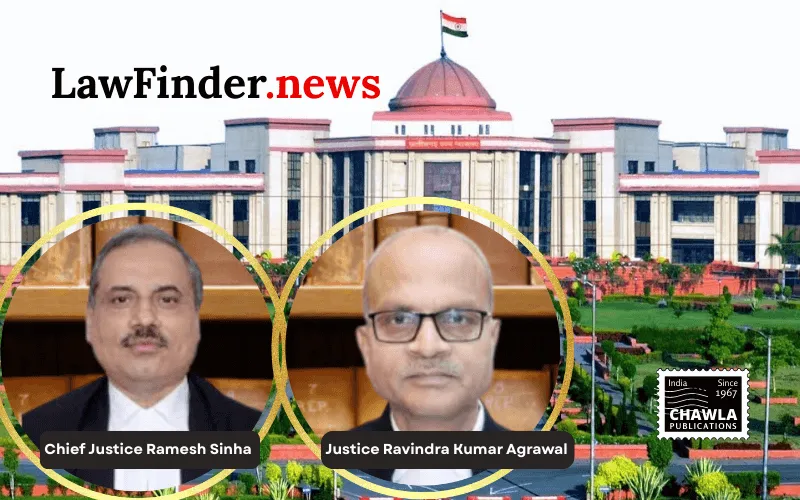
The judgment, delivered by Chief Justice Ramesh Sinha and Justice Ravindra Kumar Agrawal, emphasized that the acquittal in a criminal appeal does not automatically erase the legal consequences of a prior conviction. The court observed that Fundamental Rule 54-B, which deals with reinstatement and back wages after suspension, does not apply to cases of dismissal due to conviction.
The appellant, Ram Prasad Nayak, was initially convicted by a Special Judge in 2012 for corruption charges, leading to his dismissal. Although acquitted on appeal in 2020, Nayak sought full back wages for the period between his dismissal and acquittal, claiming the acquittal amounted to full exoneration. However, the court ruled that since he did not work during this period, he was not entitled to compensation.
The court's decision relied on precedents from the Supreme Court, including Ranchhodji Chaturji Thakore v. Superintendent Engineer and Union of India v. Jaipal Singh, which assert that acquittal does not confer an automatic right to back wages for the period of dismissal.
Despite arguments from Nayak's counsel, Ms. Surya Kawalkar Dangi, that the acquittal was on merits and the dismissal solely based on conviction, the court maintained that the employee relationship was severed due to a valid order at the time. The court's judgment underscores the importance of established legal principles over subsequent legal outcomes and reinforces the doctrine that back wages cannot be claimed without corresponding work during the period in question.
Bottom Line:
Service Law - Employee dismissed from service due to conviction in a criminal case is not entitled to back wages merely upon subsequent acquittal in appeal, as the principle of "no work no pay" applies.
Statutory provision(s): Prevention of Corruption Act, 1988, Fundamental Rule 54, Fundamental Rule 54-B.
Ram Prasad Nayak v. State of Chhattisgarh, (Chhattisgarh)(DB) : Law Finder Doc id # 2897855