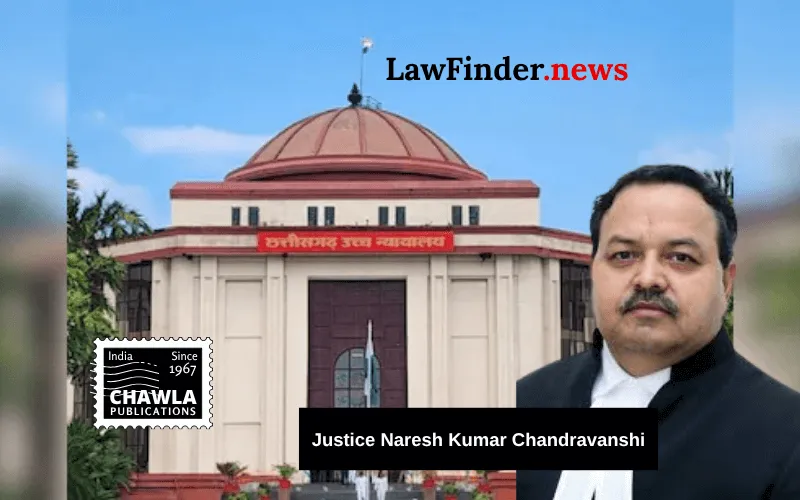
Court Quashes Police Notices Against Petitioners, Asserts Protection of Civil Rights for Peaceful Religious Gatherings
In a significant judgment, the Chhattisgarh High Court has ruled in favor of petitioners Badri Prasad Sahu and others, safeguarding their right to conduct religious prayer meetings within their dwelling house without the need for prior permission from authorities, provided no laws are violated. The case, heard by Justice Naresh Kumar Chandravanshi, centered on the issuance of police notices to the petitioners, which the court has now quashed.
The petitioners, who are the registered owners of properties in Village Godhna, Janjgir-Champa district, have been organizing prayer meetings for Christian believers since 2016. However, they faced harassment from the local police, who issued notices under Section 94 of the Bharatiya Nagarik Suraksha Sanhita, 2023, requesting them to cease such gatherings. The police contended that the petitioners lacked prior permission for these meetings.
During the proceedings, the court emphasized that there is no legal requirement for individuals to obtain prior permission to conduct prayer meetings within their homes. Justice Chandravanshi asserted that as long as no law is being violated, authorities should not interfere with the civil rights of individuals. The court also noted that action could be taken if such gatherings resulted in nuisance or law-and-order issues.
The petitioners' legal representative argued that the police actions were unwarranted since no illegal activities were associated with the prayer meetings. Furthermore, a previously issued "No Objection Certificate" by the local Gram Panchayat was reportedly retracted under pressure.
The court's decision to quash the police notices highlights the judiciary's role in upholding constitutional rights, particularly the right to freedom of religion and the peaceful assembly of individuals. The ruling provides relief to the petitioners, allowing them to continue their religious practices without fear of arbitrary interference.
In its order, the court directed the police authorities not to harass the petitioners or interfere with their civil rights under the guise of inquiry, reinforcing the protection of fundamental rights.
Bottom Line:
Right to organize prayer meetings within one's dwelling house is protected under civil rights, provided no law is violated, and prior permission is not necessary. Authorities cannot interfere or harass individuals unless nuisance or law-and-order issues arise.
Statutory provision(s): Article 226 of the Constitution of India, Bharatiya Nagarik Suraksha Sanhita, 2023, Section 94
Badri Prasad Sahu v. State Of Chhattisgarh, (Chhattisgarh) : Law Finder Doc id # 2875472