Petition by Start-up Challenging Arbitrariness in Tender Conditions Dismissed by Court
Raipur, Chhattisgarh - In a significant ruling, the Chhattisgarh High Court has dismissed a writ petition challenging the tender conditions set by the State of Chhattisgarh for the procurement of furniture items through the Government e-Marketplace (GeM) portal. The petition was filed by Singhaniya Furniture Manufacturing Business Pvt. Ltd, a recognized start-up under the Start-up India Initiative, seeking relaxation in eligibility criteria to facilitate participation by new entrants and start-ups.
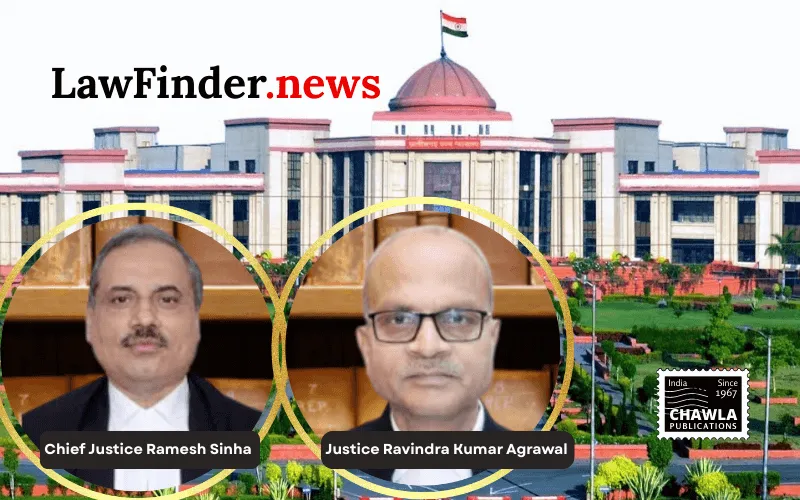
The bench comprising Chief Justice Shri Ramesh Sinha and Justice Ravindra Kumar Agrawal ruled that the scope of judicial review in tender matters is limited to examining the decision-making process for mala fides, arbitrariness, or bias. The court emphasized that it does not sit as an appellate authority over tender terms or policy decisions of the employer.
Singhaniya Furniture Manufacturing Business Pvt. Ltd contended that the tender conditions were arbitrary and discriminatory, violating statutory relaxations meant for Start-ups and Micro & Small Enterprises (MSEs) under the Chhattisgarh Store Purchase Rules, 2002 (Amendment 2025). The tender required bidders to demonstrate 80% past performance of the total bid quantity, which the petitioner argued was exclusionary and favored established players.
However, the court found no infirmity in the process followed by the tendering authority. The eligibility condition was uniformly applied to all bidders and was not shown to be arbitrary or discriminatory. The court held that the prescription of benchmarks for substantial tender value falls within the tendering authority's policy domain and cannot be interfered with in absence of mala fides, arbitrariness, or bias.
The judgment reiterated the principles laid down by the Supreme Court that judicial restraint should be exercised in administrative and contractual matters. The decision-making process must be free from arbitrariness and bias, but the soundness of the decision or the wisdom behind tender terms should not be questioned unless there is a clear case of irrationality or favoritism.
The court noted that the petitioner failed to demonstrate how the impugned condition was contrary to the statutory framework governing GeM procurements. It also highlighted that the petitioners did not challenge the validity of Rule 3 of the Chhattisgarh Store Purchase Rules, which mandates procurement through the GeM portal.
In conclusion, the court dismissed the writ petition, affirming the tender conditions as consistent with the policy decision to ensure timely and uninterrupted supply in view of the substantial tender value. The ruling underscores the limited scope of judicial review in tender matters and the importance of maintaining fairness and transparency in public procurement processes.
Bottom Line:
Judicial review in tender matters is limited to examining the decision-making process for mala fides, arbitrariness, or bias, and not the wisdom of tender terms or policy decisions.
Statutory provision(s): Articles 14, 19(1)(g) of the Constitution of India, Chhattisgarh Store Purchase Rules, 2002 (Amendment 2025)