Supreme Court Modifies Life Sentence in Telangana Rape-Murder Case Conviction under SC/ST Act Overturned; Sentence Reduced to 25 Years Without Remission
In a significant judgment, the Supreme Court of India has modified the life imprisonment sentence of one of the accused in the heinous 2019 Telangana rape and murder case. The court reduced the sentence from life imprisonment without remission to 25 years without remission, citing mitigating circumstances.
The case involved the brutal rape and murder of a woman in Yellapatar Village, Telangana. The trial court had initially convicted and sentenced the three accused to death and life imprisonment. However, the High Court later commuted the death sentence to life imprisonment without remission. The Supreme Court, while hearing the appeal of one accused, known as A2, modified this sentence.
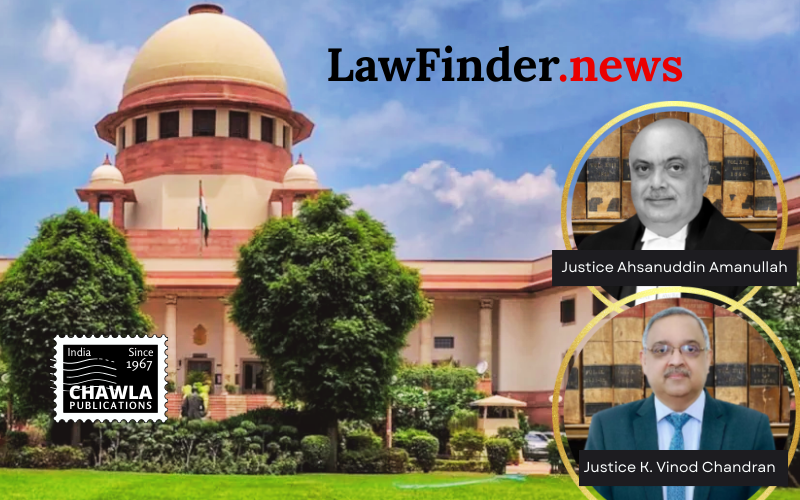
The Supreme Court bench, comprising Justices Ahsanuddin Amanullah and K. Vinod Chandran, found fault with the conviction under the Scheduled Castes and Scheduled Tribes (Prevention of Atrocities) Act, 1989, as there was no evidence to prove that the accused were aware of the caste status of the victim. This element is essential for sustaining a conviction under the SC/ST Act.
Furthermore, the court noted that the recovery of material objects during police custody did not meet the conditions for admissibility under Section 27 of the Indian Evidence Act, 1872. The prosecution had failed to prove the concealment and recovery of these items in the presence of witnesses.
Despite the lack of evidence to sustain the SC/ST Act conviction, the court upheld the conviction of A2 for rape and murder under the Indian Penal Code Sections 302 and 376D, based on circumstantial evidence. The court found that the medical evidence, DNA analysis, and the presence of the accused near the crime scene formed a complete chain of circumstances to establish their guilt.
The court highlighted the mitigating circumstances in A2’s case, such as being the sole breadwinner for his family, lack of prior criminal record, and potential for reformation, which warranted a reduction in the sentence. The court emphasized that the case did not fall under the 'rarest of the rare' category to justify the death penalty.
The judgment also directed the Telangana Legal Services Authority to provide legal assistance to the other accused in the case, who had not filed an appeal, ensuring access to justice for all involved.
Bottom Line:
Conviction under SC/ST Act requires the prosecution to prove that the accused had knowledge of the caste status of the victim. Life imprisonment till the remainder of life modified to 25 years without remission for one of the accused based on mitigating circumstances.
Statutory provision(s): Scheduled Castes and The Scheduled Tribes (Prevention of Atrocities) Act, 1989 Sections 3(1)(w)(i) & 3(2)(v), Indian Penal Code, 1860 Sections 302, 376D, Indian Evidence Act, 1872 Section 27
Shaik Shabuddin v. State of Telangana, (SC) : Law Finder Doc Id # 2822953